Plainwell · Michigan · United States
Hicks Park (the Flat Iron) — Plainwell, Michigan
The triangular downtown parcel Plainwell called the Flat Iron, which John Franklin Eesley acquired in 1904 by trading away his own mill site, and gave to the village as a park. Dedicated at Plainwell's first homecoming in 1907, it is the oldest park in the city — and it is named for Joseph Hicks, the first village president, not for the miller who bought the ground and gave it away.
Why this place matters
The earliest documented act of civic giving in this archive, and the reason the Eesley mill stands where it does. To acquire the Flat Iron for the town, John F. Eesley traded Ingraham and Travis his West Bridge Street mill site — which obliged him to cut his own mill building in two and move it to East Bridge Street in 1903–04. The park is the gift; the mill's present address is the cost of it.
Across generations
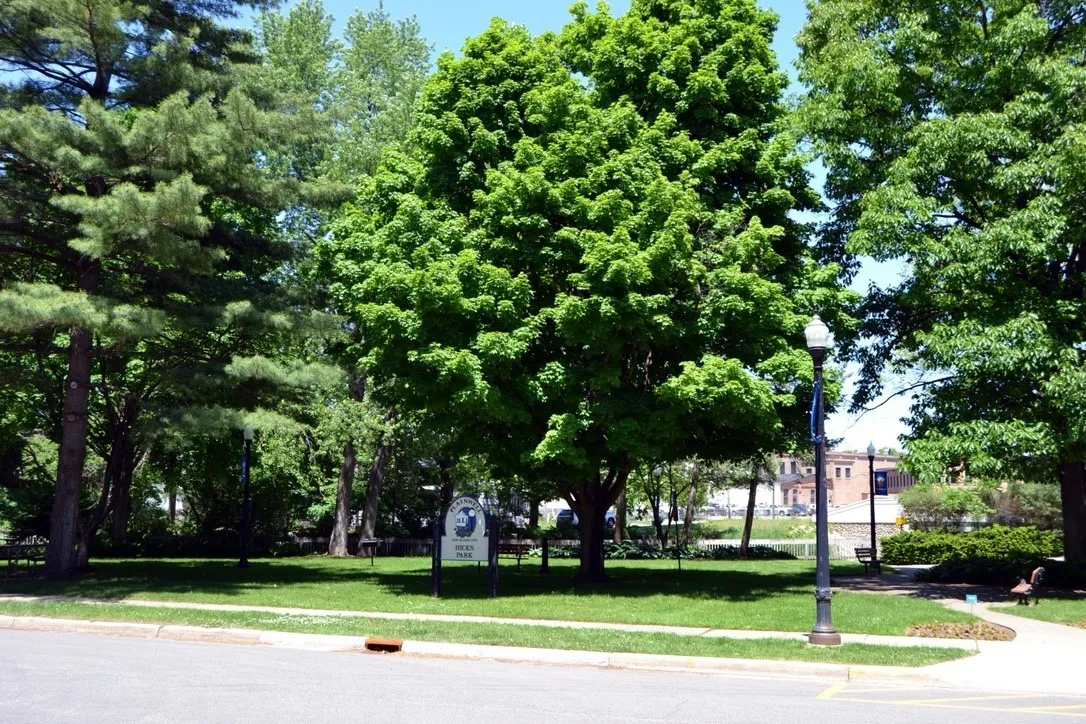
Hicks Park as it stands today, from Allegan Street — the city sign under the maples, lamp posts, benches, and the downtown brick storefronts across the far edge. The triangle is still a triangle.
Hicks Park occupies the triangular block between Allegan Street (M-89) and West Bridge Street in the centre of Plainwell. The shape gave it its old name: the townspeople called it the Flat Iron.
How the family comes into it
In the early 1900s the Flat Iron belonged to Ingraham and Travis, who ran an implement business. John Franklin Eesley — proprietor of the Sunshine Flour Mill on West Bridge Street — wanted the parcel for the town. The Allegan County Heritage Trail marker for Plainwell recorded the arrangement:
“J.F. Eesley traded his property with Ingraham and Travis, whose property was located in the flat iron, so that Mr. Eesley could give the flat iron property to the village for a park.”
He traded them his own mill site for it. That is why, in 1903–04, he had to divide his timber-frame mill building in two, haul it to the 700 block of East Bridge Street, and merge it there with a grain elevator. The mill stands at 717 E. Bridge today because its owner gave away the ground it had stood on.
The parcel was dedicated at Plainwell’s first homecoming in 1907 and is the oldest park in the city. It was named in memory of Joseph Hicks, the village’s first president — not for Eesley. An early entrance arch over the walk read JOSEPH HICKS PARK.
The three views
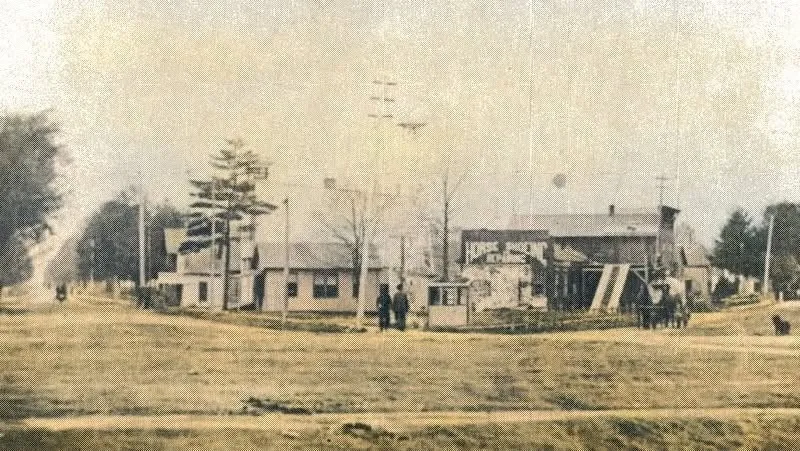
The Flat Iron as open ground, early 1900s — the triangle still bare, the town at its edges. This is the parcel Eesley traded his mill site to obtain.
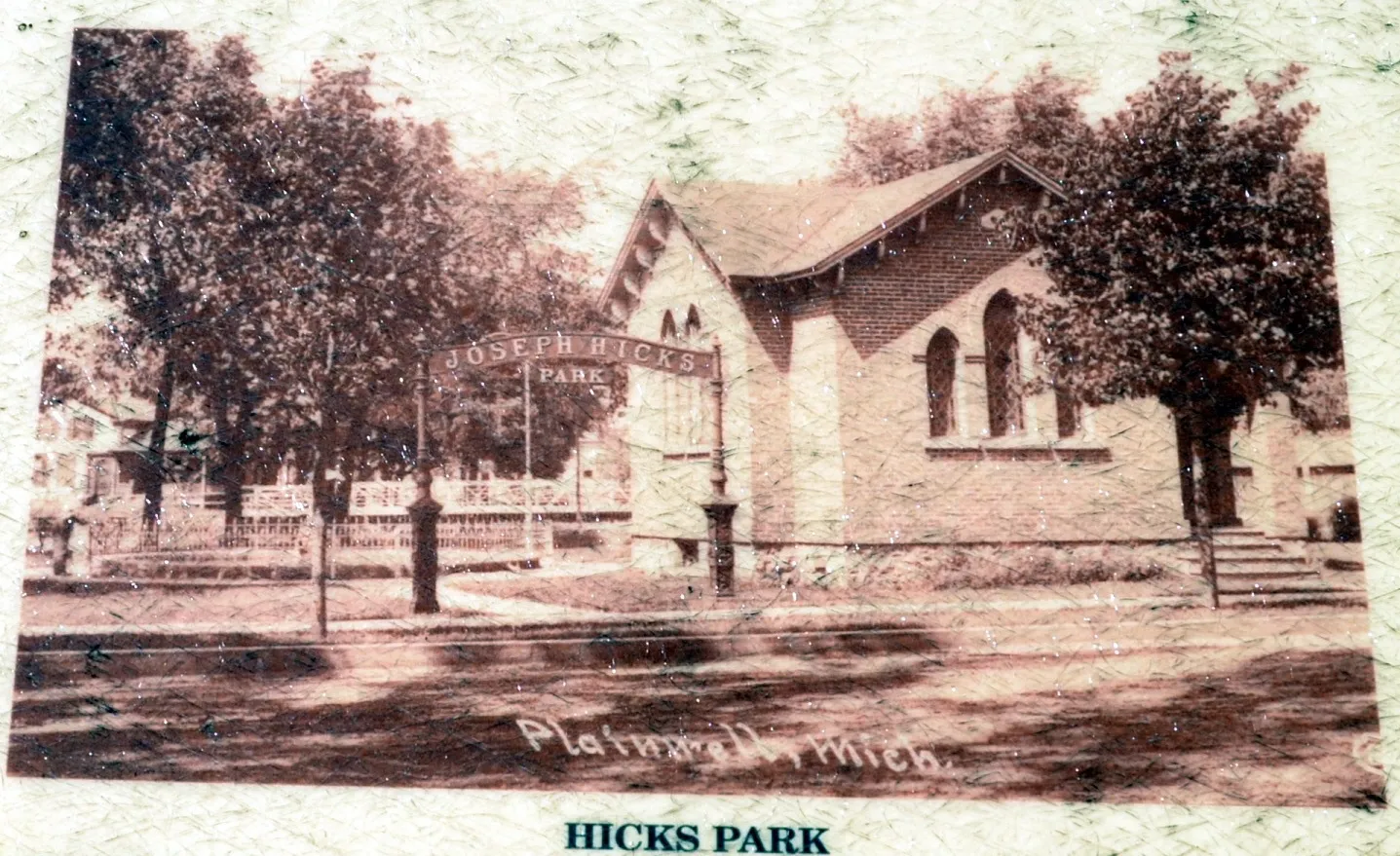
A postcard view of the park after dedication, with the JOSEPH HICKS PARK arch over the entrance walk and the brick church alongside. The arch no longer stands.
Hicks Park today. The trees planted after 1907 are full grown; the sign carries the city crest and the name Hicks.
Standing here
The park and the original mill site — West Bridge Street between Bridge and Chart — are within sight of one another, which makes the trade legible on foot: the ground he gave away, and the ground he took in exchange, a short walk apart. The present mill at 717 E. Bridge is the third point.
There is no marker in the park recording where it came from. The Heritage Trail sign that carried the sentence above was Stop 28, “Early History of Plainwell”; by July 2023 the post held only a sticker reading “New Heritage Trail Signs Coming Soon,” and the Historical Marker Database lists it as permanently removed and not to be replaced. The archived page keeps photographs of the panel.
Sources: Allegan County Heritage Trail marker text, preserved at hmdb.org; City of Plainwell parks (Hicks Park “originally called the Flat Iron because of its shape,” dedicated at the 1907 homecoming, named for the first village president); J. F. Eesley Milling Co. Flour Mill–Elevator, Wikipedia. Present-day photograph by Chuck Eesley, 2026; the two historic views from Plainwell local-history material.