← Part of Letters from Vietnam
letter
Letter to Terrie, 6 October 1970 — back to the field, booby traps, and 'raise hell' if the letters stop
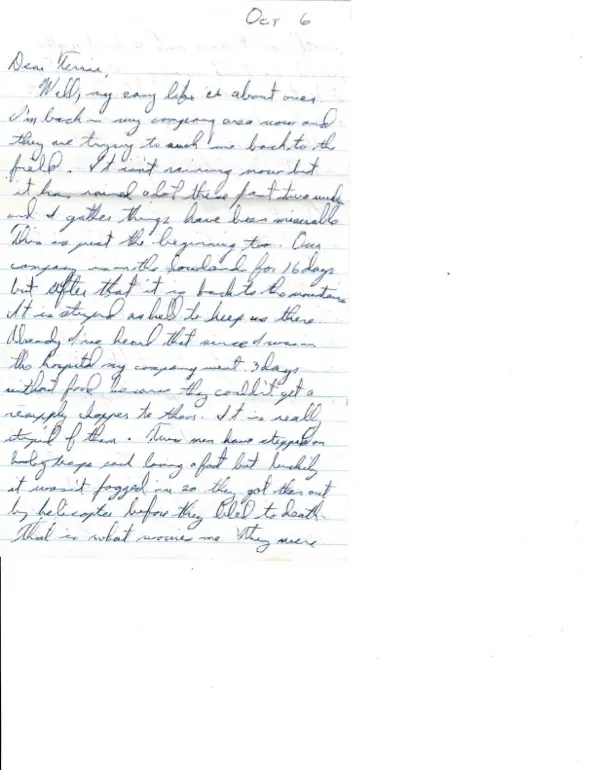
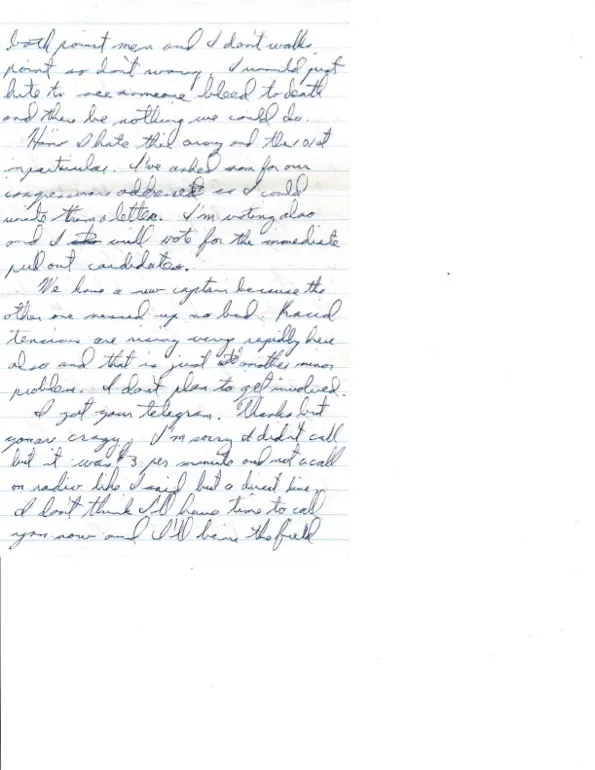
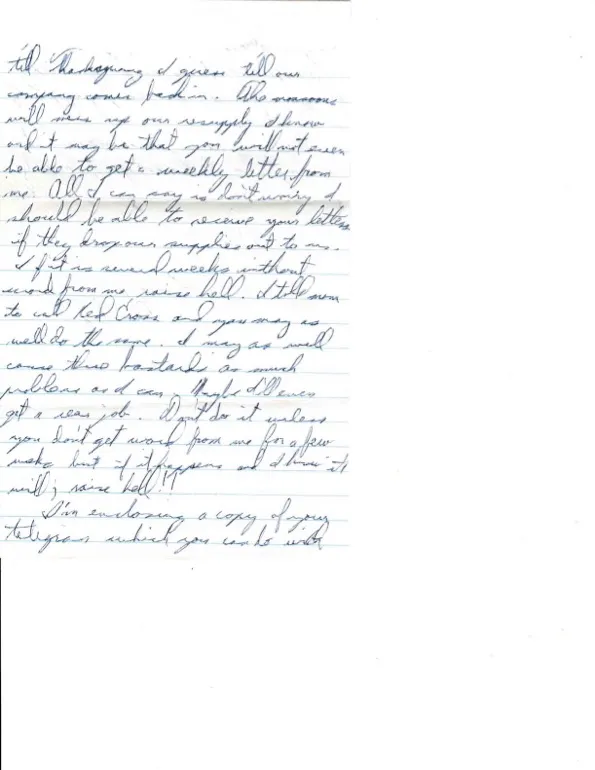
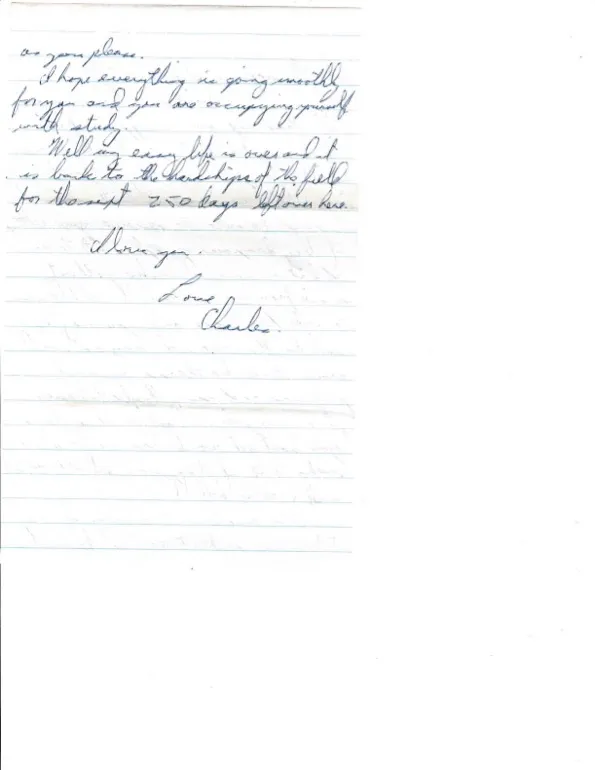
Charlie's four-page letter to Terrie dated 6 October 1970, reassembled from its scans (dad269 page 1, dad270 page 2, dad271 page 3, dad272 page 4), written from the company area as his malaria convalescence ends and he is sent back to the field. His easy life is about over; it has rained a lot the past two weeks and things have been miserable, and this is just the beginning — the company was in the lowlands 16 days but after that it's back to the mountains, which he thinks is stupid. While he was in the hospital his company went 3 days without food because a resupply chopper couldn't reach them, and two men stepped on booby traps and lost a foot — gotten out by helicopter before they bled to death because it wasn't fogged in. That is what worries him, though he reassures her they were point men and he doesn't walk point. 'How I hate this army and the 101st in particular.' He has asked his mother for their congressman's address so he can write, and he is voting for the immediate-pullout candidates. There's a new captain because the last one messed up so badly; racial tensions are rising, another problem he doesn't plan to get involved in. He got her telegram (thanks, but she's crazy); he's sorry he didn't call, but it was $3 a minute on a direct line, not a radio call, and he won't have time now — he'll be in the field until Thanksgiving until the company comes back in. The monsoon will foul the resupply and she may not even get a weekly letter; if it's several weeks without word from him, raise hell — write the Red Cross, as he will, to cause the Army as much trouble as he can. He encloses a copy of her telegram for her to use as she pleases, hopes she's occupying herself with study, and closes 'I love you. Love, Charles.'
What the letter is
6 October 1970, the end of the Cam Ranh Bay convalescence: Charlie is back in the company area and being pushed back to the field. It is one of the corpus’s angriest letters — not at the enemy, but at the Army: a company left three days without food, two men maimed by booby traps, a chain of command he calls “stupid as hell,” and, for the first time on the page, an explicitly political response. He has written home for his congressman’s address, and he is voting for the “immediate pull out candidates.” The letter’s practical heart is a set of instructions for the coming silence: the monsoon will foul the resupply, the letters may stop for weeks, and if they do — “raise hell.”
Transcription
Oct 6
Dear Terrie,
Well, my easy life is about over. I’m back in my company area now and they are trying to send me back to the field. It isn’t raining now but it has rained a lot these past two weeks and I gather things have been miserable. This is just the beginning too. Our company was in the lowlands for 16 days but after that it is back to the mountains. It is stupid as hell to keep us there. Already I’ve heard that since I was in the hospital my company went 3 days without food because they couldn’t get a resupply chopper to them. It is really stupid of them. Two men have stepped on booby traps and lost a foot but luckily it wasn’t fogged in so they got them out by helicopter before they bled to death. That is what worries me — they were
[page 2:] both point men and I don’t walk point so don’t worry. I would just hate to see someone bleed to death and there be nothing we could do.
How I hate this army and the 101st in particular. I’ve asked mom for our congressman’s address so I could write them a letter. I’m voting also and I will vote for the immediate pull out candidates.
We have a new captain because the other one messed up so bad. Racial tensions are running very rapidly here also and that is just another minor problem. I don’t plan to get involved.
I got your telegram. Thanks, but you’re crazy. I’m sorry I didn’t call but it was $3 per minute and not a call on radio like I said, but a direct line. I don’t think I’ll have time to call you now and I’ll be in the field
[page 3:] til Thanksgiving I guess, till our company comes back in. The monsoon will mess up our resupply I know, but it may be that you will not even be able to get a weekly letter from me. All I can say is don’t worry — I should be able to receive your letters if they drop our supplies out to us. If it is several weeks without word from me, raise hell. I’ll write to the Red Cross and you may as well do the same. I may as well cause these bastards as much [problems] as I can. Maybe I’ll even get a rear job. Don’t [do] it unless you don’t get word from me for a few weeks, but if it happens — and I know it will — raise hell.
I’m enclosing a copy of your telegram which you can use
[page 4:] as you please.
I hope everything is going smoothly for you and you are occupying yourself with study.
Well my easy life is over and it is back to the hardships of the field for the next 250 days [I have] over here. I love you.
Love Charles
What the letter records
The Army as the enemy. “How I hate this army and the 101st in particular.” The letter’s fury is aimed inward — at the command that kept a company in the mountains during the monsoon, left it three days without food, and “messed up so bad” it needed a new captain. It is the fullest statement of the anti-Army register that runs as an undertone through the whole tour, here boiling over.
Going political. “I’ve asked mom for our congressman’s address… I will vote for the immediate pull out candidates.” This is Charlie moving from private complaint to action: writing his congressman and voting against the war from inside it. It connects directly to the Mothers-for-Peace correspondence with Dorothy Hauser and to the “brainwashing article” Terrie mailed him — the anti-war current the family shared across the distance.
The booby traps, and the reassurance. “They were both point men and I don’t walk point so don’t worry.” The pattern of every combat-news passage in the corpus: he tells her the frightening thing — two men, a foot each, saved only because the weather let the helicopter in — and immediately builds the reassurance around it. The fear is real; the comfort is engineered.
“Raise hell.” The operational instruction for the coming silence, repeated twice, is one of the most vivid things in the letters: he is teaching her how to make noise on his behalf — Red Cross inquiries, “cause these bastards as much [problems] as I can” — because the monsoon is about to cut the line between them. It reframes her role from waiting to acting.
Racial tensions. “Racial tensions are running very rapidly here also… I don’t plan to get involved.” A one-line window onto the well-documented racial strife inside the U.S. military in 1970–71, noted by Charlie as “another minor problem” he means to stay clear of — the tired detachment of a short-timer counting days.
Scans