Charles McMaster Eesley
also known as Charlie; Dad
b. 1947-02-17, Columbus, Ohio
d. 2015-11-26, Marietta, Ohio
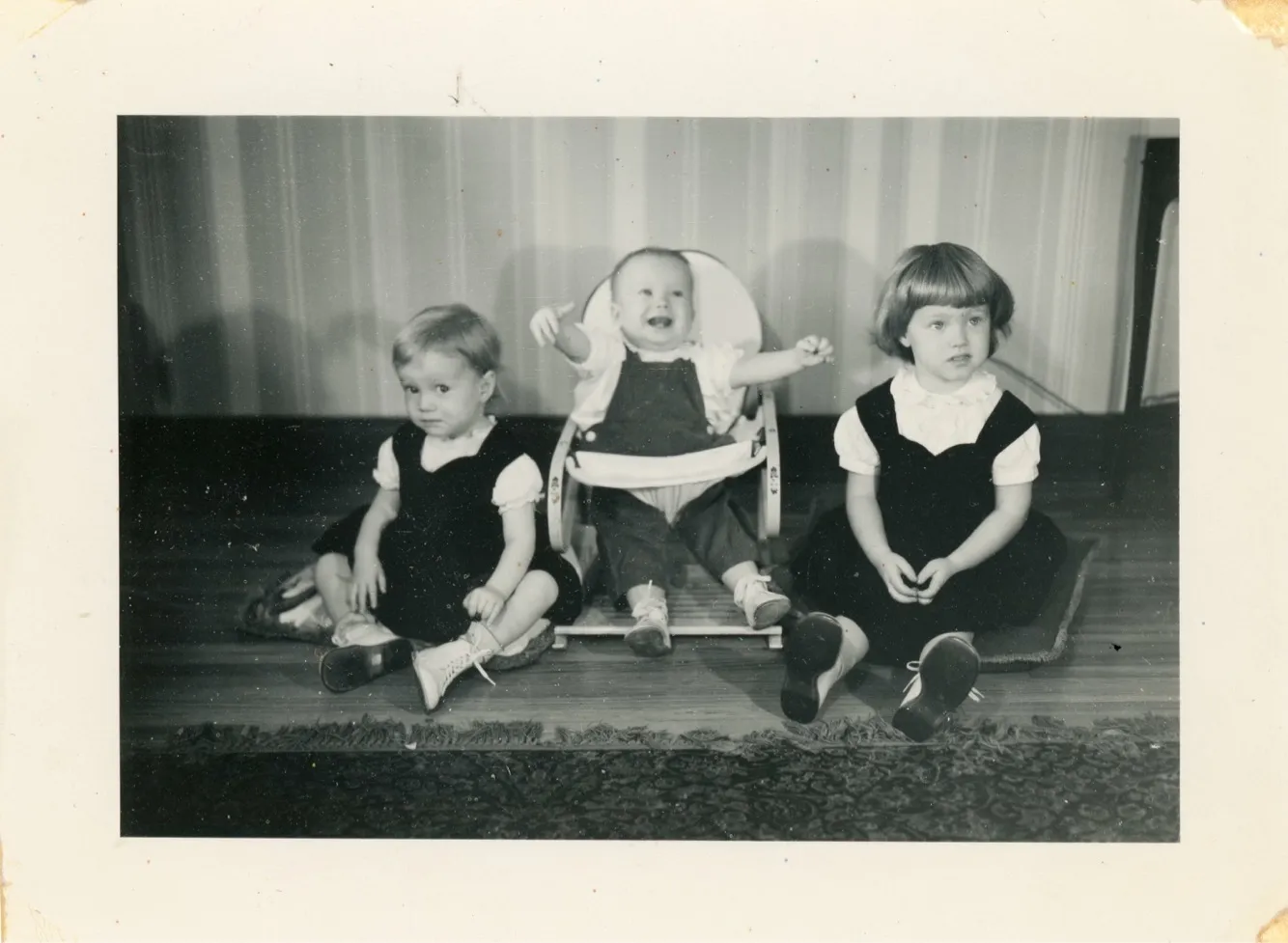
Charles McMaster Eesley was born 17 February 1947 at White Cross Hospital in Columbus, Ohio, to Will Eesley the architect and Peggy McMaster Eesley — the third of their four children and their only son. He served in the U.S. Army from 1969 to 1971 — a Vietnam veteran — and his time in Saigon never left him. He took his economics degree at Marietta College, worked in sales and human resources at Sears, then turned to finance: stockbroker first for The Ohio Company and later for Hazlett, Burt & Watson.
The autobiography
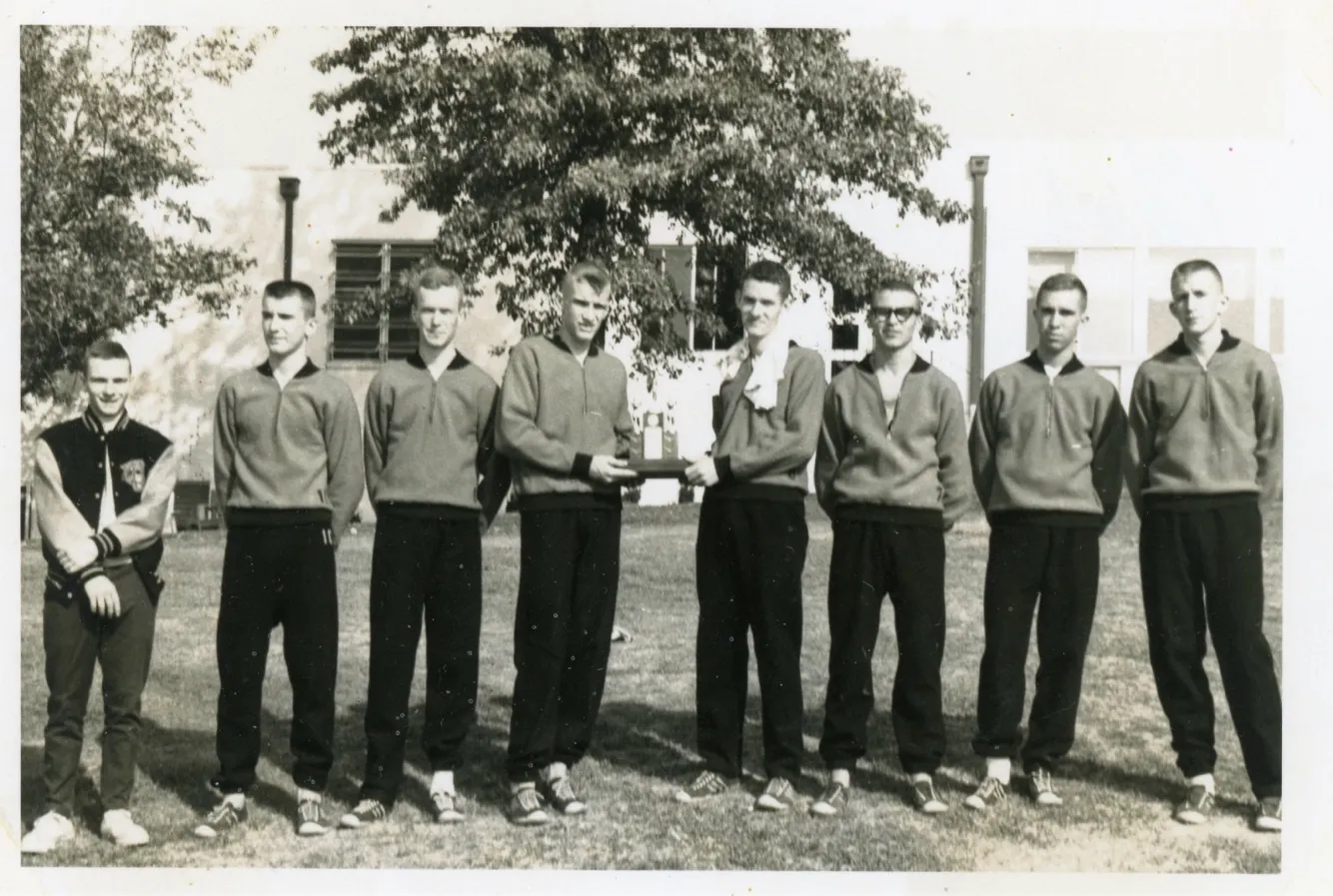
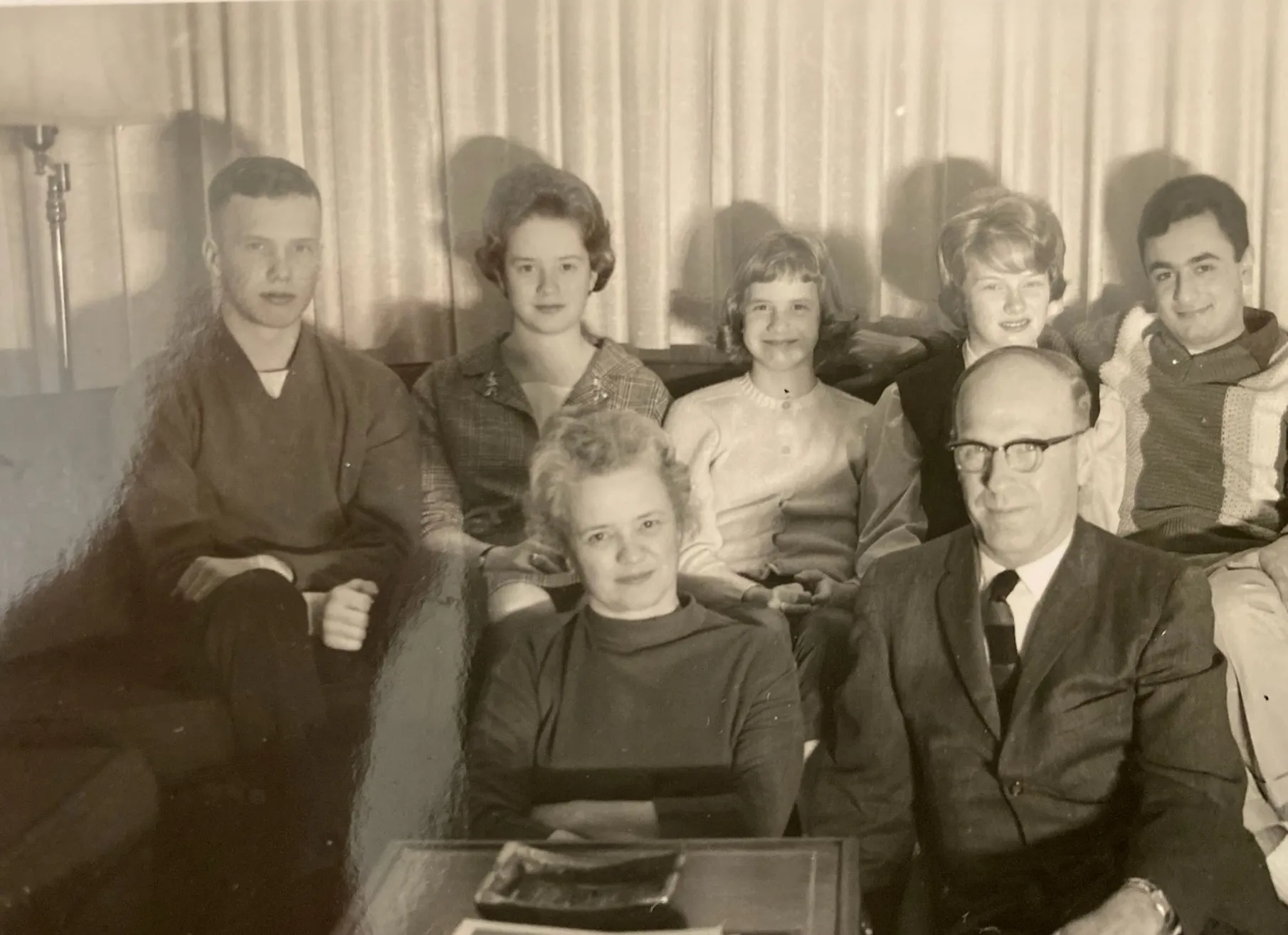
The single longest piece of Charlie’s own voice in this archive is “My Mother’s Favorite Son” — the 17-page autobiography he typed for his 12th-grade English class at Marietta High School in c. 1964–1965, dedicated “to my parents who have made this autobiography a happy one.” It opens with the family history of the Eesley and McMaster grandparents, then the difficult birth (“I was a mess!” — born with a club left foot, a hernia, and a face he scratched bloody so badly the doctors were worried about his eyes), the Columbus-to-Marietta move at age three, the architect-father’s eight-year remodel of the house at 651 Sixth Street, the Marietta paper routes Charlie ran for four years, the stock market that became his lifelong interest, the cross-country running silver and gold medals, DeMolay, the looming Marietta College career. The autobiography is the earliest sustained piece of his voice in the archive — three years before the 13 December 1968 letter to Terrie, five years before the Vietnam letters, fifty years before Chuck’s eulogy.
The Annapolis years and the 1983 return to Marietta
After his June 1971 ETS from the U.S. Army, Charlie and Terrie settled on the east coast — in the Annapolis, Maryland area — where Charlie worked at Sears in the years that followed. Chuck was born there; the Annapolis household carried the family’s first decade of married life.
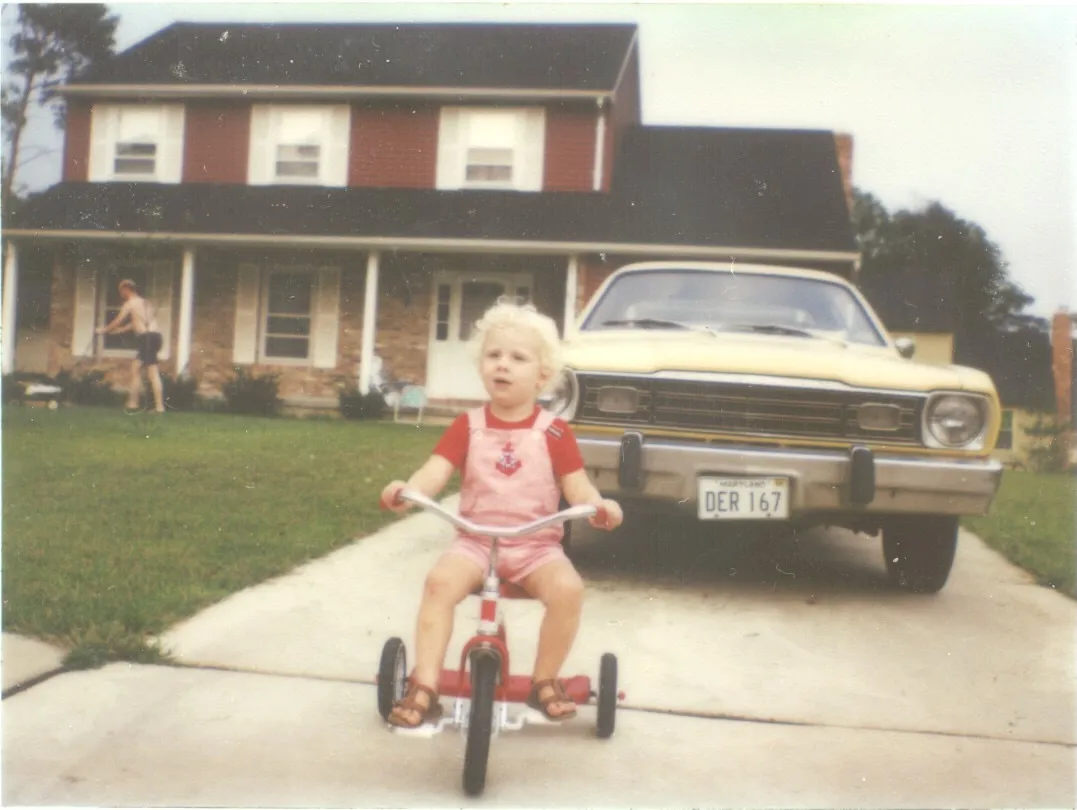
The earliest documentary frame of the Annapolis house in this archive is a summer-afternoon snapshot of toddler Chuck on a red Radio Flyer tricycle in its driveway, c. 1981–83 — the two-story red-clapboard colonial with a covered front porch and a brick first floor that anchored the Maryland years. See the artifact page.
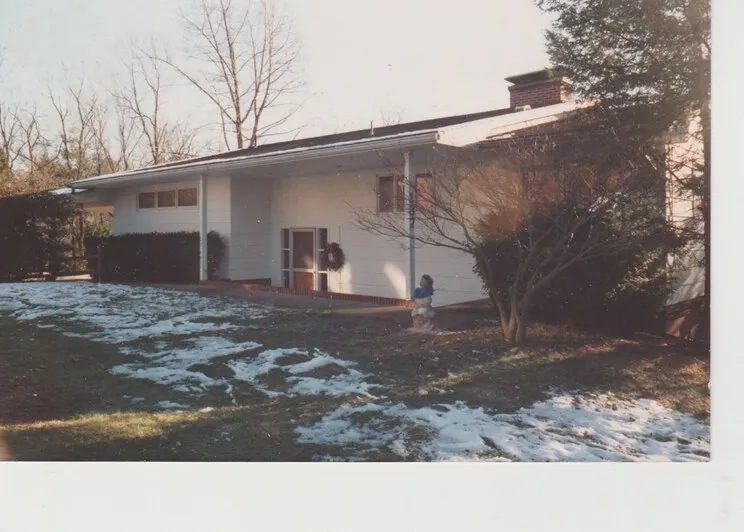
The family moved back to Marietta in 1983, to 137 Hillcrest Drive — on the same street as Chuck’s Aunt Betty (Davis) Wolfe and Uncle Norm Wolfe at 108 Hillcrest Drive, a few houses down. A winter exterior of the Hillcrest house, from Charlie’s own album, is the one surviving frame of it in this archive. Chuck was three years old. The Hillcrest proximity to Betty and Norm anchored the next chapter of his childhood: the holiday-host household down the street that the 108 Hillcrest place page describes.
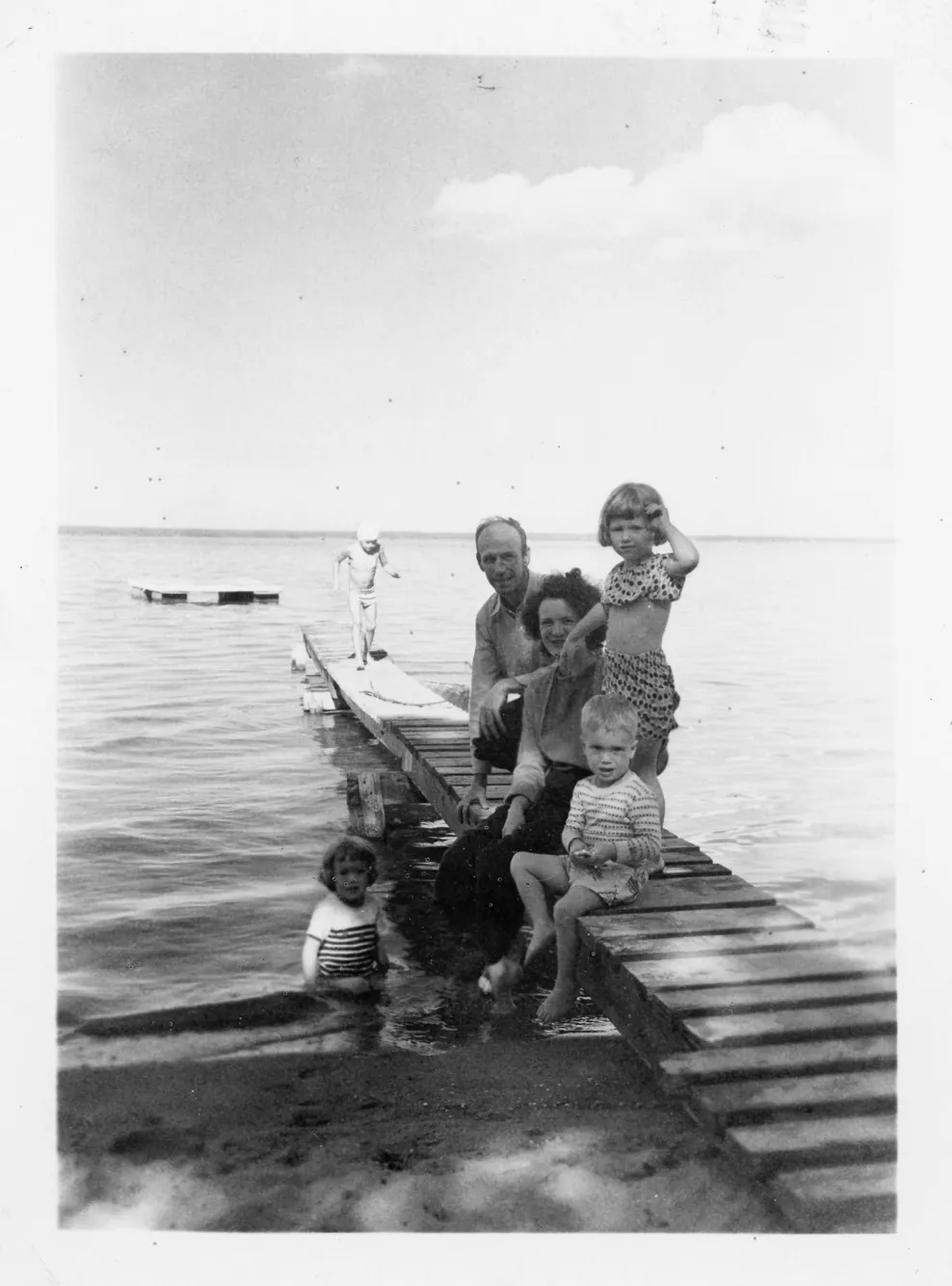
The family later moved to Highland Ridge Road in Lowell — the house Will the architect had designed and built. For most of Chuck’s childhood the family lived on Highland Ridge Road, in a house Will had designed, with the orchard Will had planted, the small red bridge Will had originally built, a pond out back that froze hard enough to walk on if you were lucky and not if you weren’t, and the Arnolds — John and Peggy — a hundred yards away as the nearest neighbors and a thousand times closer than that in practice. The tractor he flipped over on himself once. John Arnold helped him up.
He was a longtime, active member of First Congregational United Church of Christ in Marietta, where he served on boards and helped manage the endowment. He read the Civil War. He read Vietnam. He read the financial pages. He believed strongly in the responsibility of voting. He remarried, to Diana Hoffer Eesley, in 1999. He died November 26, 2015 at sixty-eight, in Marietta.
Vietnam, 1969–1971
The Army tour is the period his life turned on. He shipped to Saigon in 1969, twenty-two years old, and rotated out in 1971. He never went back. He never wanted to. His son’s eulogy names it directly: “most long conversations with dad would wind their way eventually back to what he experienced in Vietnam from 69–71.”
The letters he wrote home from Saigon survived the trip back to Marietta. Most of them went to Terrie Lee Wildermuth, his then-girlfriend and future wife — the two of them already a couple before he shipped; a smaller set went to his parents Will and Peggy. They are the period record on his side of those two years — what he was telling Terrie and his parents in real time, before any of it had become the thing he carried for the rest of his life. The letters are catalogued in this archive as the Letters from Vietnam collection: a curated set of five-to-seven letters published in full; the rest catalogued by metadata only, with the body held in the private family archive. The collection page states the curation principle and points to the individual letters as they are added.
A few of the things this layer carries that the rest of the page does not: the stereo and record player that was the first thing he bought when he got back, the Beatles and the Rolling Stones as the music of the year of his life he had been living through, the “smart-ass comments that probably nearly got him court-marshaled” he kept making across the rest of his life, the Skype call decades later when Chuck was visiting Saigon and Charlie, on the other end, declined to come. Chuck would later go back to that city — now Ho Chi Minh City — to teach entrepreneurship to young Vietnamese founders, the same place his father had crossed an ocean to fight in, on the opposite errand a generation on.
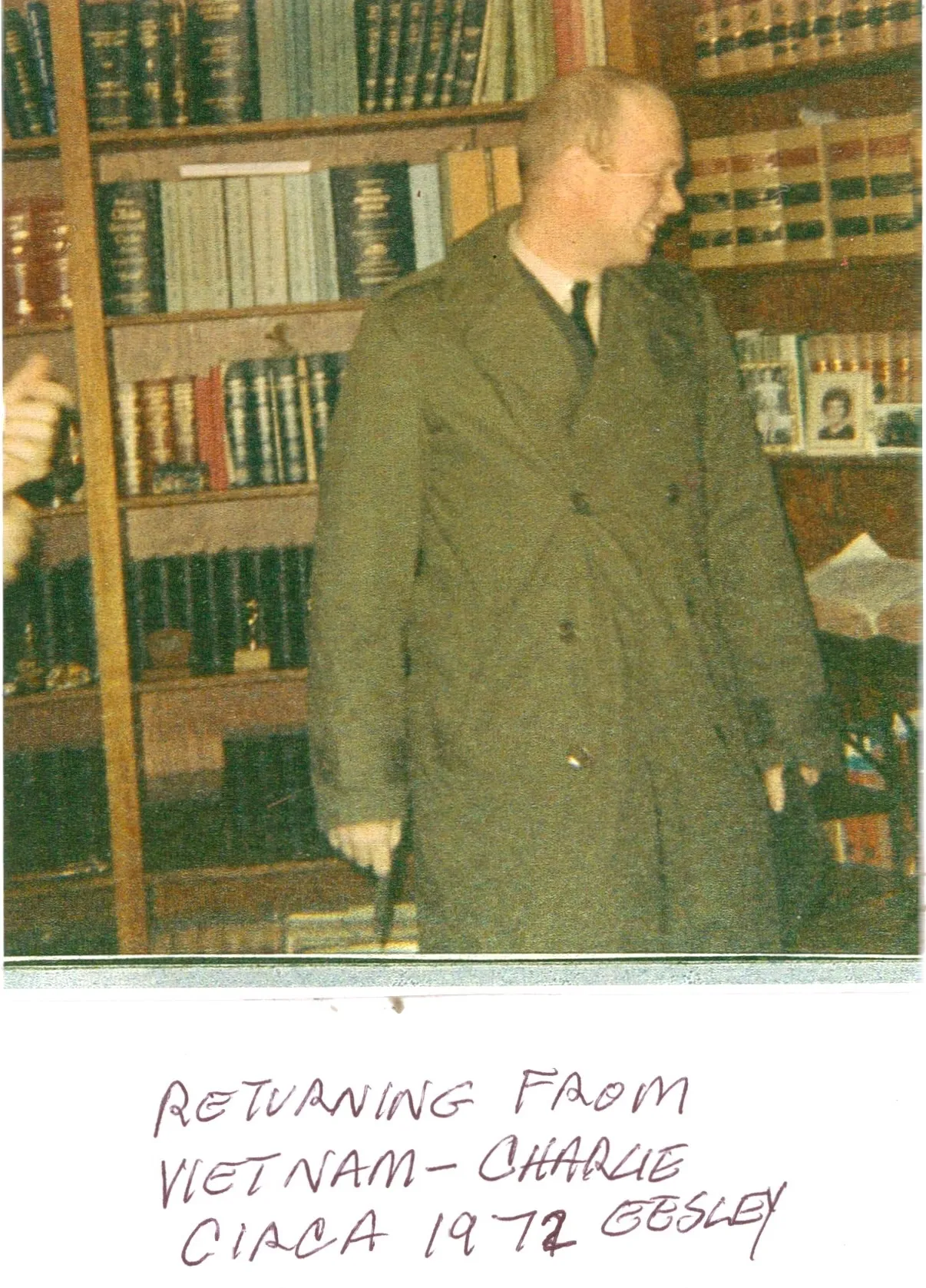
A color photograph of him home from the tour, c. 1971 sits in this archive — Charlie in his Army officer’s wool overcoat, smiling broadly in front of a wall of leather-bound volumes at his parents’ Sixth Street house, with a hand visible at the left edge raising a drink to him in welcome. Terrie captioned the print years later in red felt-tip: “RETURNING FROM VIETNAM — CHARLIE CIRCA 1972 EESLEY”.
The long tail of the war — Agent Orange, diabetes, and the forced retirement
The Vietnam letters carry a confirmed September 1970 malaria episode at a Vietnam hospital, followed by convalescence at the U.S. military’s 6th Convalescent Center at Cam Ranh Bay. The malaria recovered. The deeper exposure didn’t.
Charlie served with the 101st Airborne in I Corps in 1969 to 1971 — exactly the unit, area, and time the U.S. Department of Veterans Affairs uses to apply the “boots on the ground” presumption for Agent Orange exposure. American forces sprayed millions of gallons of the herbicide across South Vietnam through Operation Ranch Hand from 1962 to 1971; the 101st operated in heavily-defoliated mountain areas including the A Shau Valley. Direct exposure was almost certain.
Years later he developed Type 2 diabetes, one of the diseases the VA presumes was caused by Agent Orange exposure in service members who served in Vietnam between 1962 and 1975. The diabetes progressed along the classic three-complication path: diabetic retinopathy took his vision slowly, forcing him to retire early from his stockbroker career; peripheral neuropathy (itself separately on the VA Agent Orange presumptive list) ran in parallel; and the peripheral vascular complications eventually contributed to the foot amputation the eulogy refers to (“the late comment about losing weight in the form of his foot”). The VA awarded him a 100% disability rating.
The line about losing weight in the form of his foot — the dark joke about something he had no control over — is the same dry, smart-ass voice his Vietnam letters carry through the field and his autobiography carries at seventeen. The disease was Agent Orange; the voice was Charlie.
His father-in-law Robert Earl Wildermuth had also developed diabetes (likely Type 2 as well, and not Agent Orange related given Robert Earl’s earlier Pacific and Korean service, though he did not serve in Vietnam). Robert Earl’s 1989 memoir addresses the next generation directly: “to anyone of my progeny that I may have passed the diabetic gene onto, have faith for diabetes can be lived with if certain care is taken.” Charlie’s diabetes joined his father-in-law’s as the disease running through the family on both sides of Chuck’s maternal-and-paternal medical history.
The wedding photograph
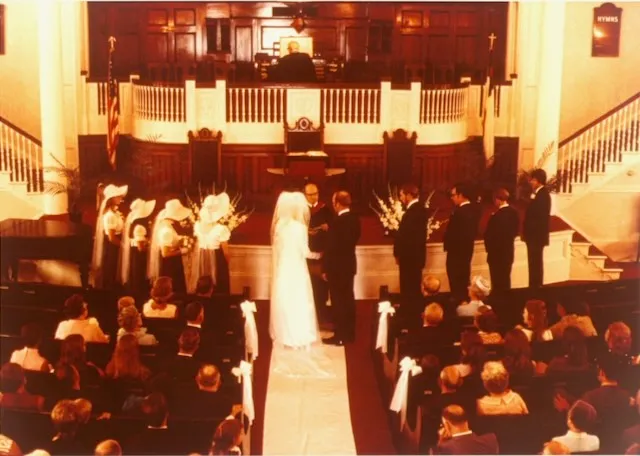
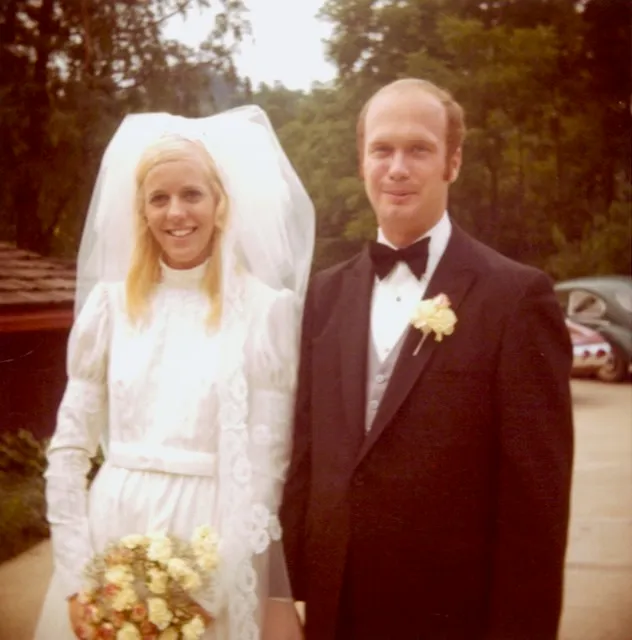
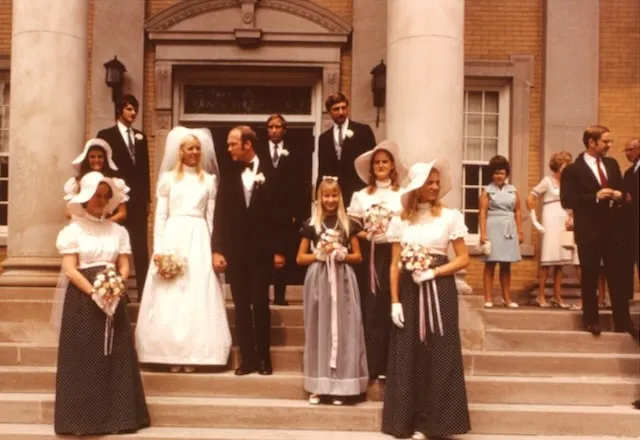
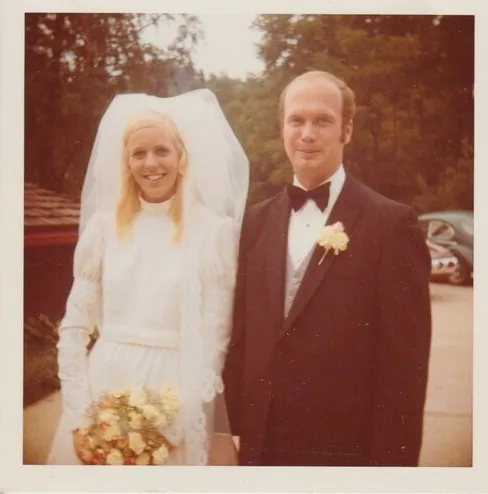
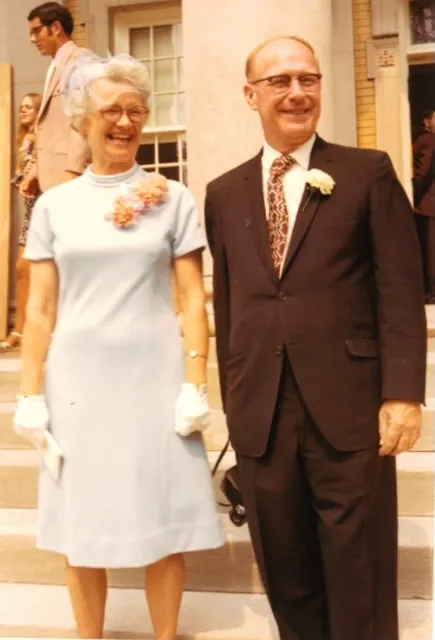
The wedding is the resolution of the Letters from Vietnam: the two of them married after the courtship-during-a-war that the letters had been. Two frames survive. The bride-and-groom couple portrait — Terrie in veil and gown, Charlie in a black tuxedo, a period sedan at the edge of the frame — is the day from the couple’s own side; the companion frame of Will and Peggy mid-laugh on the church steps is the day from the parents-of-the-groom’s side.
The eulogy
The fullest portrait of him by far is the eulogy Chuck delivered at the memorial service. It is the most personal document in this archive in Chuck’s own voice and stands in the documents collection as itself a piece of the family record:
Read “Eulogy for Charles McMaster Eesley” (by Chuck Eesley, 2015)
A few of the things that page carries that the obituary’s prose does not: the pond, the dance Charlie suggested down the empty aisle of the Parkersburg–Cleveland leg, the firework that went into the pine tree, the stereo as the first thing Charlie bought when he came home from Vietnam, the CDs Chuck “stole” for college and then gave away to his cousin Nooreen Rubin, the late comment about losing weight in the form of his foot, the Hemingway line Chuck closed on: “Everyone is broken by life, but afterward many are strong in the broken places.”
The places Chuck named at the end of the eulogy — the track at Marietta Middle School, the house on Highland Ridge, Grandma Peggy’s house at 424 N 7th Street, any TV that can pull up CNBC — are the places that should hold his name longest.
Biographical summary above draws on his published obituary at Cawley & Peoples Funeral Home; the rest of the page comes from Chuck’s eulogy.
From his obituary
Charlie’s obituary, published by Cawley & Peoples Funeral Homes, gathers the public shape of his life. He was a Vietnam veteran, having served with the U.S. Army from 1969 to 1971, and a member of American Legion Post 64. He took his economics degree at Marietta College, worked in sales and human resources at Sears, then became a stockbroker for The Ohio Company and later Hazlett, Burt & Watson. He was an “active, long-standing member of First Congregational United Church of Christ,” where he served on boards and helped manage the church’s endowment funds.
Two lines of it are pure Charlie. He “enjoyed studying the Civil War and military strategy.” And: “Charlie was a staunch Republican, and believed that voting is a privilege of every citizen and is important to effect change and ensure the future of the nation.”
He was survived by his wife Diana Hoffer Eesley, whom he married 9 January 1999; his son Charles E. Eesley, Ph.D., of Stanford, CA; his mother Terrie Bain, of Marietta; three sisters — Jeanne Kamiab (Joe), of Cleveland, Anne Eesley, of Muskegon, Michigan, and Margaret Eesley, of Kent; nieces Stephanie Mullin, Amena Rubin, and Nooreen Rubin; and great-nephews Cameron and Harrison Mullin.
Funeral services were held 11:00 am Saturday, 12 December 2015 at the First Congregational Church, the Rev. Linda Steelman officiating, with full military honors. The family directed memorial donations to the American Diabetes Association and the First Congregational Church Memorial Fund — the diabetes a quiet last echo of the Agent Orange exposure the rest of this page traces.
Remembrances left in the guestbook
Condolences signed on the funeral-home guestbook in the weeks after his death:
“Charlie was always so nice to me and our family. He was kind, funny, and a wonderful person. He will be missed. I have happy memories, and my prayers and love to my sister, Diana.” — Ellen Wittekind (with Dan & family), 3 December 2015
“My family was close to the Eesley family. Charley was always a friend and felt he was a brother.” — Julia Hausser Guffey, 9 December 2015
“Charlie will be greatly missed. I remember well how he would call the church office and give me a hard time, or ask ‘What’s going on at the church?’ We would have good talks when he appeared in the office. Charlie was a great guy. My deepest sympathies to you and to all the family.” — Diana Whitlatch, 8 December 2015
“Diana & family, I am so sorry to hear about your husband. May God’s peace help you through this time. Love & prayers.” — Teresa Beach (WSCC), 2 December 2015
Source: Charles McMaster Eesley obituary and guestbook, Cawley & Peoples Funeral Homes, November–December 2015.
Photographs and documents in the archive
Beyond the portraits and wedding frames above, the archive holds:
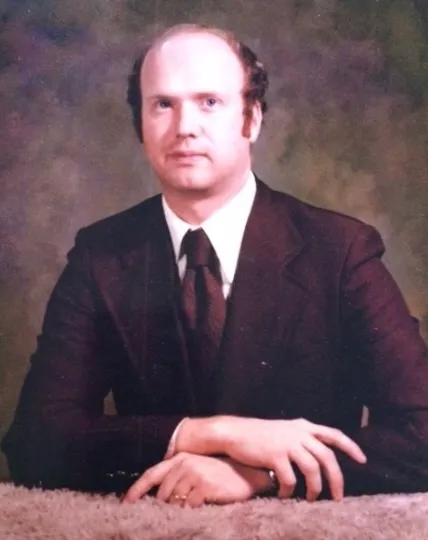
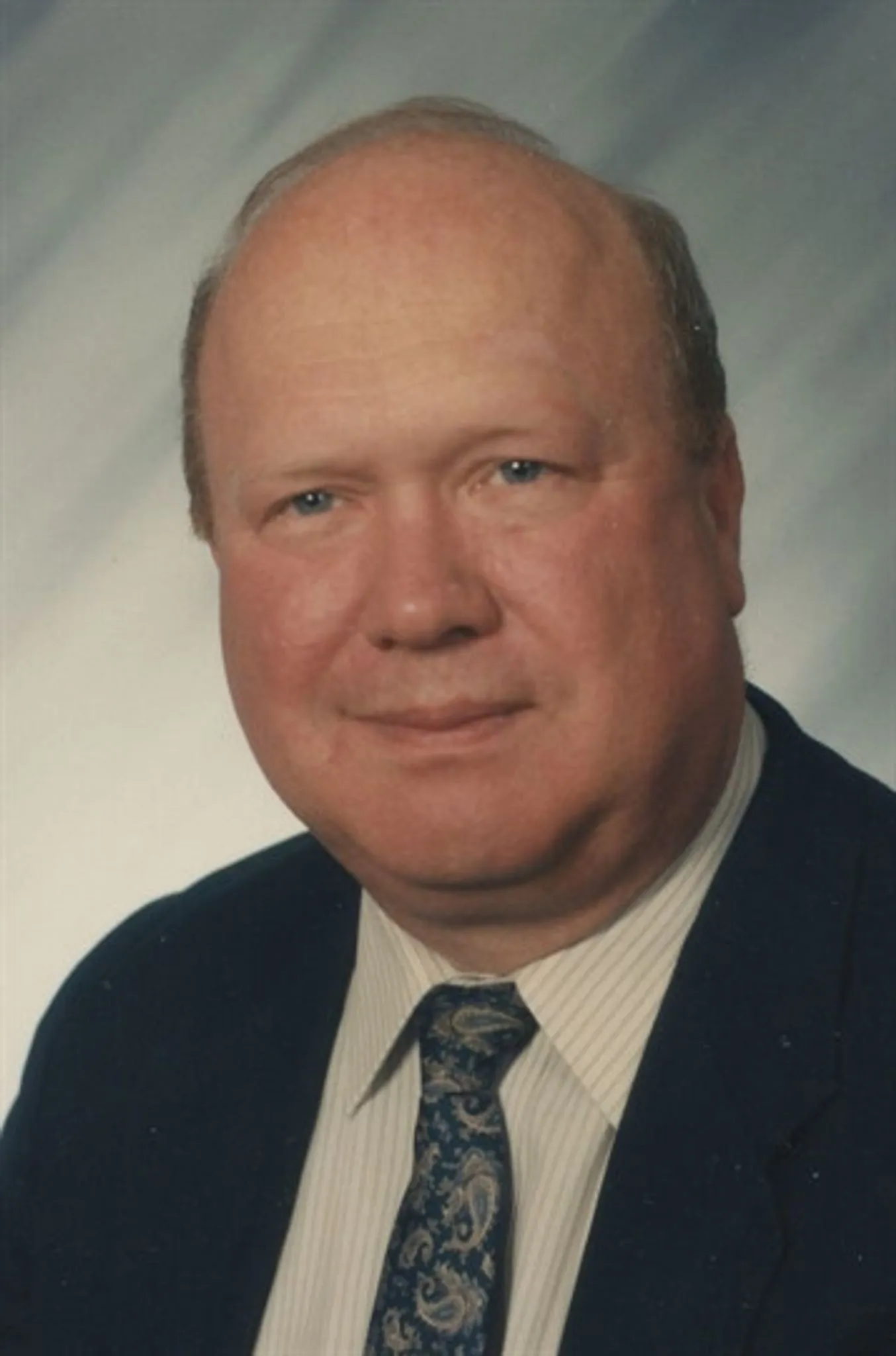
- Formal studio portrait — the studio likeness at the head of this page.
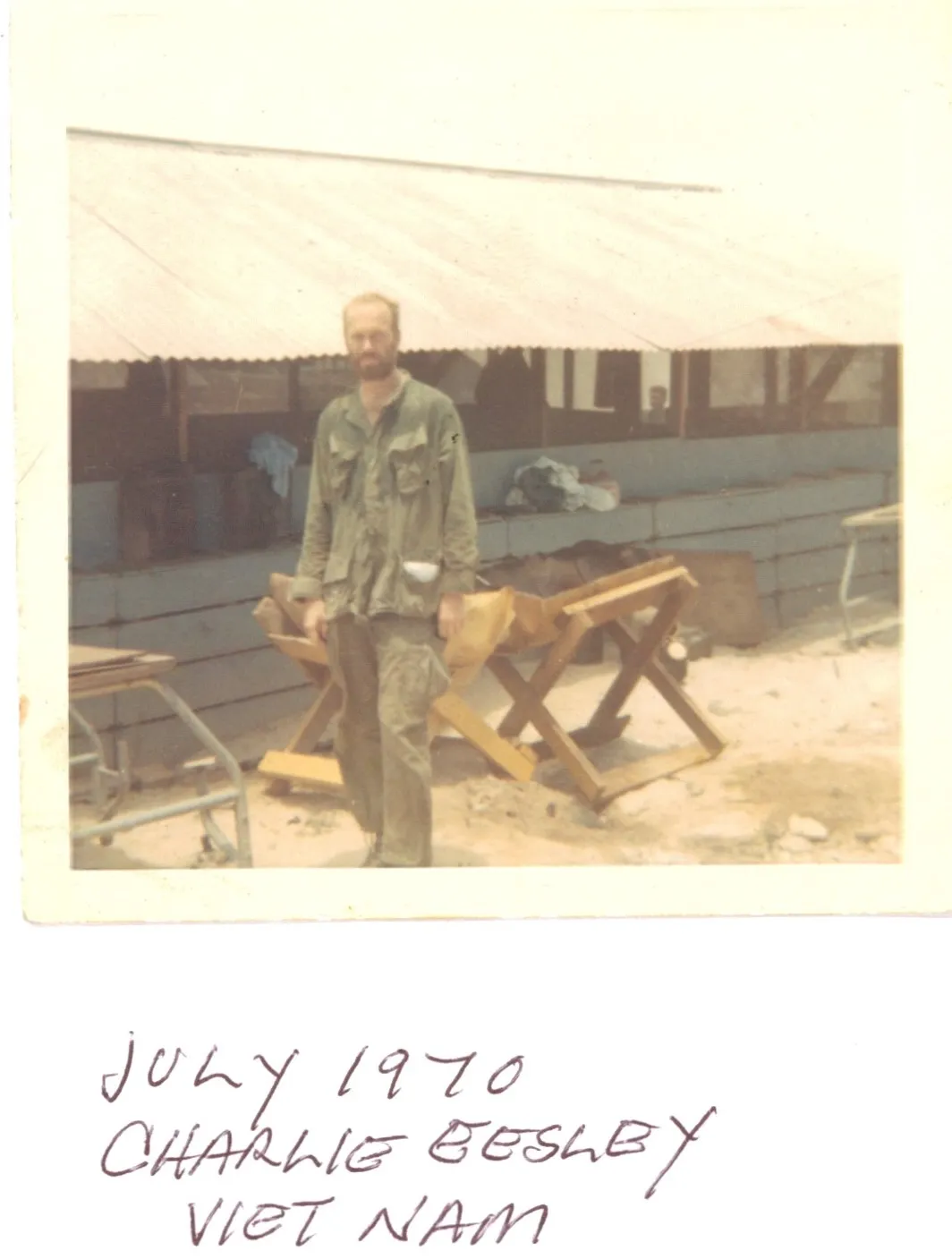
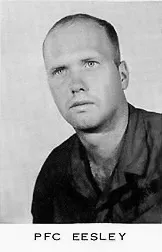
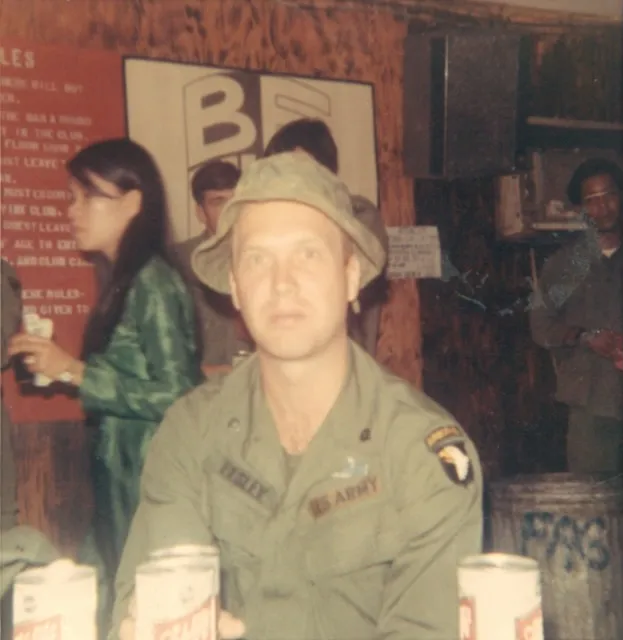
- PFC portrait and in Vietnam, July 1970 — two Army-years frames, the enlistment portrait and one from in-country.
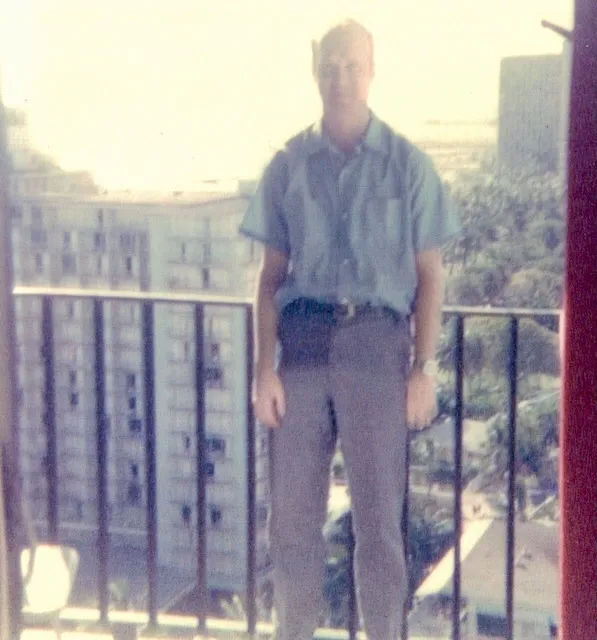
- On Waikiki, Hawaii, 1971 — from the April 1971 R&R that the Letters from Vietnam spent months planning.
- The wedding ceremony and the wedding party — two more frames from the 1971 wedding day.
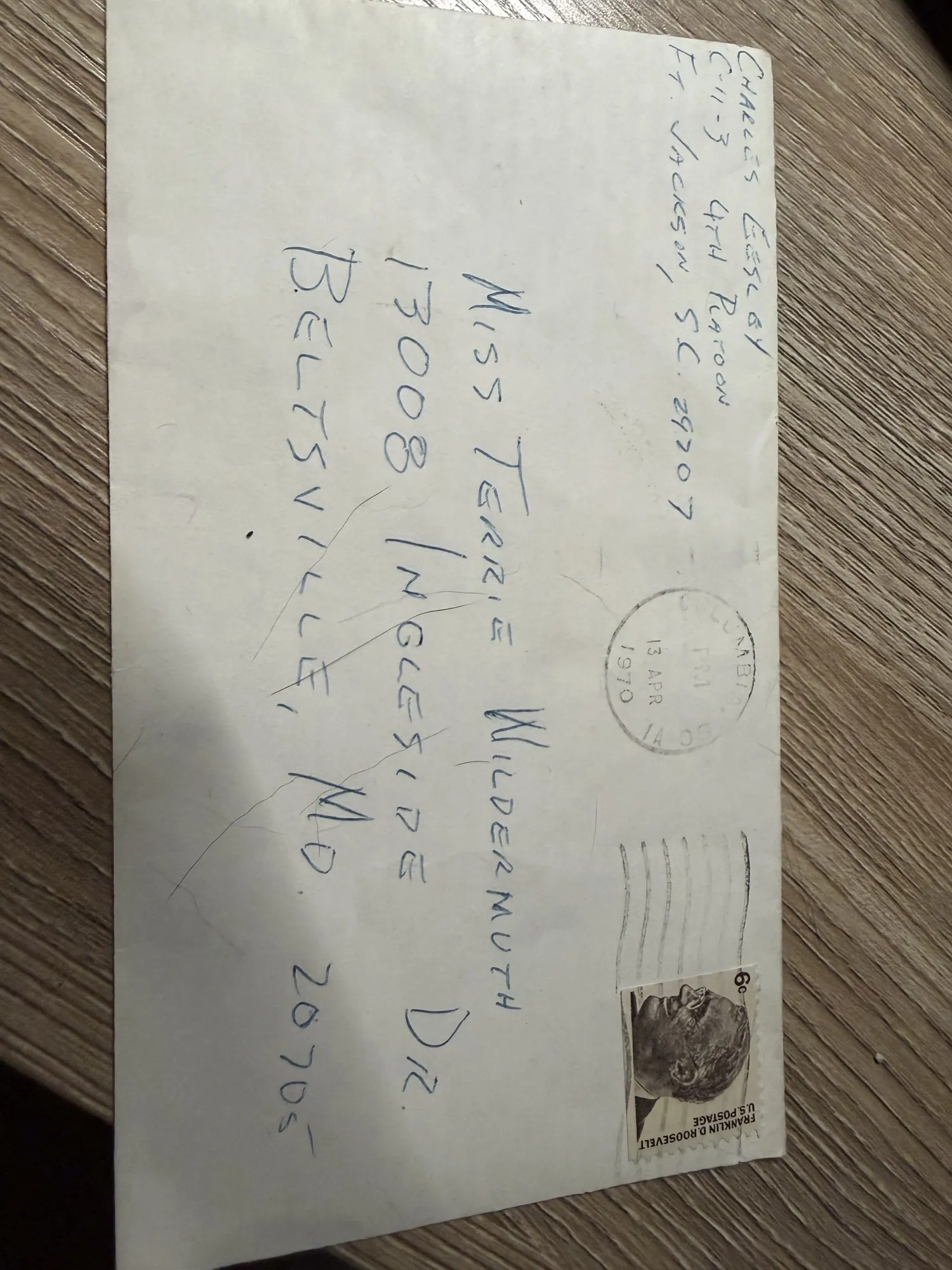
- Envelopes from the Vietnam letters — the mailed covers of the correspondence to Terrie.
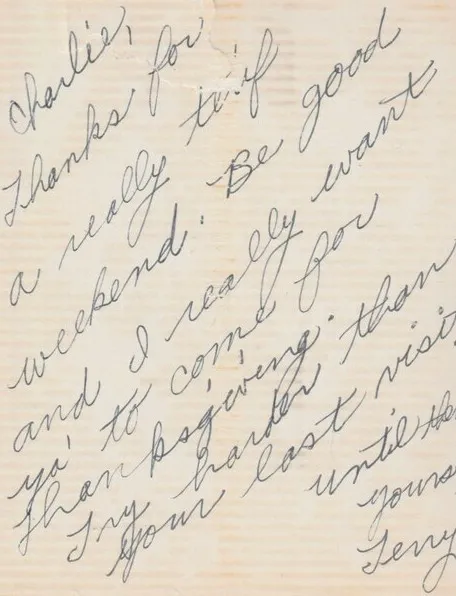
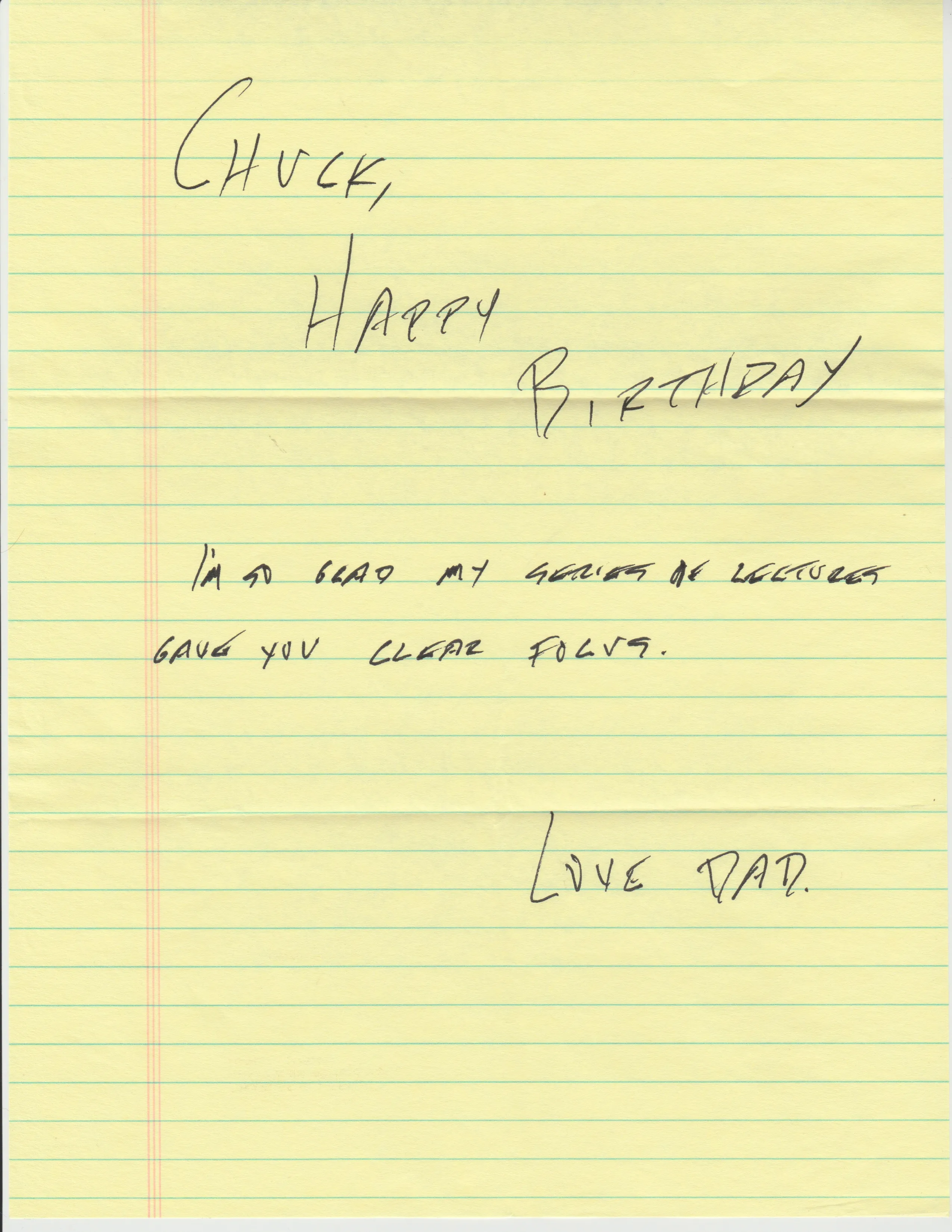
- Birthday note to Chuck, 1990s — a note in Charlie’s hand to his son.
See also
He is the middle of the three Charleses — named in 1947 for his grandfather Charles Leonard (skipping his own father Will’s first name), with McMaster for his mother Peggy’s family. He in turn named his son Charles Eric in 1979. A short essay reads the grandfather-and-grandson naming chain across the three generations.
Further reading
On the war that came home with him:
- The Vietnam War (Ken Burns and Lynn Novick, 2017) — the same documentary series, ten-part — alongside the Ken Burns Roosevelts Chuck referenced at the end of the eulogy.
- Dispatches by Michael Herr — the war as it sounded.
- Matterhorn by Karl Marlantes — the war as it felt.
- The Vietnam Veterans Memorial Fund and its searchable wall directory — for the names of those who didn’t come home from Charlie’s years (1969–71).
See also — family threads
Charlie is an anchor for four of the ten threads in the Family threads synthesis essay:
- Thread #5 — Service, stewardship, and giving — Vietnam veteran (1969–1971); First Congregational UCC board and endowment management; “believed strongly in the responsibility of voting.”
- Thread #6 — Humor as transmitted inheritance — the “smart-ass comments that probably nearly got him court-martialed” in Saigon; the dry humor inherited from Peggy and diluted into Chuck.
- Thread #7 — Showing up in small, daily, unglamorous ways — visited Peggy at Harmar Place every day after work in her final stretch.
- Thread #9 — Crossing for what’s next — the Saigon crossing of 1969 is the Letters from Vietnam corpus’s whole frame; the courtship with Terrie ran across that ocean for two years.
Appears in
- My Mother's Favorite Son — Charles Eesley's 12th-Grade Autobiography (c. 1964–1965) — memoir
- Letters from Vietnam — letter-collection
- Letter to Terrie, 31 October 1968 — 'I didn't care much for the Vanilla Fudge' — letter
- Letter to Terrie, 13 December 1968 — letter
- Letter to Terrie, late 1969 — refusing NCO school, and 'beginning to hate the army' — letter
- Letter to Terrie, c. April 1969 — 'Cops are everywhere. People get arrested right & left' — letter
- Letter to Terrie, undated — the D.C. guard interview, and the Tomb of the Unknown Soldier — letter
- Letter to Terrie, late 1969 — Christmas leave plans, '711 days left' — letter
- Letter to Terrie, undated — reception week: 'Basic begins Monday,' and a visit planned for 20 December — letter
- Letter to Terrie, undated — the first day of basic training, KP from 3:30 AM — letter
- Letter to Terrie, undated — mortar training next week, and why NCO school 'just isn't worth it' — letter
- Letter to Terrie, c. early 1970 — the physical and mental tests, and 'one step above a trainee' — letter
- Letter to Terrie, undated — clerk training, an E-2 not a PFC, and 'I type too slow' — letter
- Letter to Terrie, c. February 1970 — orders, and 80 days in the army — letter
- Letter to Terrie, 18 February 1970 — nine weeks into stateside NCO training, rumors of Vietnam — letter
- Letter to Terrie, c. early 1970 — Fort Bragg, the .45 and the hand grenades — letter
- Letter to Terrie, undated — first day of mortar training, NCO school turned down, and 'at least I won't be going overseas' — letter
- Letter to Terrie, undated — firing the M-72, the $20 ring, and 'I'm still willing to marry you' — letter
- Letter to Terrie, spring 1970 — 'I saw the movie Woodstock today. Quite interesting!' — letter
- Letter to Terrie, 12 April 1970 — 'This may be your last letter from here' — letter
- Letter to Terrie, undated — 'a lot depends on my orders now,' finish school, and not forcing a marriage — letter
- Letter to Terrie, c. summer 1970 — '5th day out... violent campus' — letter
- Letter to Terrie, 22 June 1970 — letter
- Letter to Dorothy Hauser, 26 June 1970 — 'keep working for peace,' the mountains, and a company hit hard — letter
- Charlie Company, 1-506th Infantry, 101st Airborne — unit context for Charlie Eesley's Vietnam letters — ancestor-sketch
- Letter to Terrie, 1 July 1970 — 'the month is over with, I have survived,' 50 days in — letter
- Letter to Terrie, 8 July 1970 — 'I'll give one of them my sob story and see if I can't sway public opinion' — letter
- Letter to Terrie, 18 July 1970 — 'I get mail from 5 different people yesterday but none from you. I am angry.' — letter
- Letter to Terrie, mid-1970 — 'I'm carrying the machine gun now. It weighs 25 lbs. I haven't used it and hope I never do.' — letter
- Letter to Terrie, 5 August 1970 — a beach day, and what happened when some guys went to the village — letter
- Letter to Terrie, 5 August 1970 — Firebase Ripcord's shelling, company losses, and 'just homesick' — letter
- Letter to Terrie, 9–11 August 1970 — a new captain expected, a beard restarted, and 'calm down a little' on marriage — letter
- Letter to Terrie, 17 August 1970 — beach guard, and a few things she should know — letter
- Letter to Terrie, 29 August 1970 — 109 days in, and 'we will work things out as they happen' — letter
- Letter to Terrie, 4 September 1970 — writing from under a poncho, and a new captain's bad call — letter
- Letter to Terrie, 7 September 1970 — the firebases evacuate for the monsoon, and honeymoon ideas — letter
- Letter to Terrie, 10 September 1970 — a helicopter crash, camera shopping, and 'I'd be a resident of Canada now' — letter
- Letter to Terrie, 14 September 1970 — the 50-day streak of no contact broken, and 'a terrible, cruel business' — letter
- Letter to Terrie, 21 September 1970 — 'Guess what! Here I am in the hospital suffering from Malaria' — letter
- Letter to Terrie, 28 September 1970 — 'I'm at Cam Ranh Bay at a convalescence center to fully recover from my bout with Malaria' — letter
- Letter to Terrie, 30 September 1970 — dreading 20 inches of October rain, and pulled for guard instead — letter
- Letter to Terrie, late 1970 — 'When I get back I'll probably be in Marietta two weeks…' — letter
- Letter to Terrie, October 1970 — 'I will vote for the immediate pull-out candidates' — letter
- Letter to Terrie, 3 October 1970 — recovering from malaria at Cam Ranh Bay, and 144 days in — letter
- Letter to Terrie, 6 October 1970 — back to the field, booby traps, and 'raise hell' if the letters stop — letter
- Letter to Terrie, 8 October 1970 — 'I leave for the damn field today' — letter
- Letter to Terrie, 10 October 1970 — 'still alive,' in the lowlands, and hoping Nixon announces a plan — letter
- Letter to Terrie, 14 October 1970 — 'Out of the field May 1, 1971 because all combat troops are being withdrawn' — letter
- Letter to Terrie, 14 October 1970 — the Hawaii idea, first floated, and 'out of the field May 1' — letter
- Letter to Terrie, 15 October 1970 — VIPs by helicopter, and 'the first enemy killed in over 3 months' in the brigade — letter
- Letter to Terrie, 17 October 1970 — 'the only group that has contact anymore,' and 240 days left — letter
- Letter to Terrie, 19 October 1970 — 160 days in, mailing out by chopper, and 'maybe we can have a good time next summer' — letter
- Letter to Terrie, 20 October 1970 — the apartment question, and 'you still get the most letters' — letter
- Letter to Terrie, 24 October 1970 — a typhoon alert, a congressman's reply, and 165 days in — letter
- Letter to Terrie, 28 October 1970 — one year in the Army, and 'I do think I came back out too soon' — letter
- Letter to Terrie, c. late October 1970 — Hawaii, the November leave, and 'move in with me' — letter
- Letter to Terrie, 5 November 1970 — fourteen days without mail, the congressman inquiry, and the extension plan — letter
- Letter to Terrie, c. 8 November 1970 — the stand-down, day 180, and a Sydney R&R idea — letter
- Letter to Terrie, 12 November 1970 — a short answer to ten letters, the Nov 13 stand-down, and 213 days left — letter
- Letter to Terrie, 15 November 1970 — the package, Spec 4, the 2-week leave rumor, and the inquiry closed — letter
- Letter to Terrie, 18 November 1970 — back out to 'really hairy' action, half drunk in the rear — letter
- Letter to Terrie, 21 November 1970 — 'I love you but would prefer to send you $1000' — letter
- Letter to Terrie, 23 November 1970 — platoon radio operator, the year's schedule, and Thanksgiving in the rear — letter
- Letter to Terrie, 25 November 1970 — Thanksgiving in the field, and two deaths explained — letter
- Letter to Terrie, 28 November 1970 — the misty rain, the families maybe meeting at Christmas, and 'what is your answer to the Hawaii deal?' — letter
- Letter to Terrie, 30 November 1970 — disgusted with the Army, the lowlands flooding, and November finally over — letter
- Letter to Terrie, 4 December 1970 — sixty days on the XXIV Corps security platoon in Da Nang — letter
- Letter to Terrie, 8 December 1970 — the phone call he's planning, and the good life in the rear — letter
- Letter to Terrie, 12 December 1970 — settled into the rear, a friend killed back home, and the March 12 drop — letter
- Letter to Terrie, 14 December 1970 — the $3.30-per-minute phone call and the Christmas-present joke — letter
- Letter to Terrie, 16 December 1970 — 'The picture you got was taken in the enlisted men's club here on post' — letter
- Letter to Terrie, 17–18 December 1970 — a guard tower fired on, a beach day, and still hoping to get out — letter
- Letter to Terrie, 18 December 1970 — the 50-50 odds, and the children at the fence — letter
- Letter to Terrie, 22 December 1970 — a bad outlook for the drop, and 'Budda' — letter
- Letter to Terrie, 25 December 1970 — Christmas morning on guard — letter
- Letter to Terrie, 28 December 1970 — the 10-month-tour rumor, a scare that was a lie, and 'maybe even get married early' — letter
- Letter to Terrie, 31 December 1970 — '10-month tour is definite, I should be home in March' — letter
- Letter to Dorothy Hauser, 1 January 1971 — 'Say hi to the Mothers for Peace for me' — letter
- Letter to Terrie, 1 January 1971 — the new year, the rumors, and a picture enclosed — letter
- Letter to Terrie, 2 January 1971 — a booby trap, Tet rumors, and the drop — letter
- Letter to Terrie, 5 January 1971 — the 1st Air Cav stands down and the drops grow — letter
- Letter to Terrie, 9 January 1971 — mail delays, the extension math, and the 'Donut Dollies' — letter
- Letter to Terrie, 9 January 1971 — a birthday letter from the general's beach house — letter
- Letter to Terrie, c. January 1971 — the Da Nang base, marijuana, and GI life — letter
- Letter to Terrie, 13 January 1971 — rats, the Bob Hope show, and a word against poetry — letter
- Letter to Terrie, 14 January 1971 — 1:45 a.m., rumors and a puzzling tape — letter
- Letter to Terrie, 15 January 1971 — on guard, scotch, and what's actually hard about the field — letter
- Letter to Terrie, 19 January 1971 — 'I'm going to extend 32 or 33 days so I ETS from here' — letter
- Letter to Terrie, 21 January 1971 — 'It seems we all will be back at Evans Feb 4' — letter
- Letter to Terrie, 24 January 1971 — sunburn, finals, and planning a March reunion in Hawaii or the U.S. — letter
- Letter to Terrie, 29 January 1971 — monsoons, 136 days, and dreading the field — letter
- Letter to Terrie, 30 January 1971 — pay day, the field he dreads, and an $850 stereo — letter
- Letter to Terrie, 2 February 1971 — 'a last ditch effort to win the war' — letter
- Letter to Terrie, 3 February 1971 — 'Staying here in Danang til March 5 and maybe even longer. It is all too good to be true.' — letter
- Letter to Terrie, 4 February 1971 — 'Don't be surprised when you hear about Laos being invaded' — letter
- Letter to Terrie, 8 February 1971 — 'I finally got a clerk job' — letter
- Letter from Peggy Eesley to Terrie, 10 February 1971 — the Camp Eagle extension and the Congressional letter — letter
- Letter to Terrie, 10 February 1971 — 'I'm still in Danang' (same day as Peggy's congressional letter) — letter
- Letter to Terrie, 14 February 1971 — a Valentine, and the clerk orders clear — letter
- Letter to Terrie, 15 February 1971 — awaiting orders in Da Nang, and the Hawaii budget — letter
- Letter to Terrie, 15 February 1971 — point by point: Laos, the one room, and a wedding in August — letter
- Letter to Terrie, c. February 1971 — NCO school or the early-out — letter
- Letter to Terrie, 17 February 1971 — the typing job, the R&R allocation, and the stereo — letter
- Letter to Terrie, 18 February 1971 — still in Da Nang, waiting on orders, down to 115 — letter
- Letter to Terrie, 21 February 1971 — finally here, Camp Eagle, the clerk job comes through — letter
- Letter to Terrie, 22 February 1971 — extended to June 14, the long hours, and a death from December — letter
- Letter to Terrie, 24 February 1971 — five days in, and the cost of R&R — letter
- Letter to Terrie, 1 March 1971 — 'A lot of guys are going to get killed. I'm really glad that I'm out of the field.' — letter
- Letter to Terrie, 5 March 1971 — 'I arrived yesterday and am now at Quang Tri' — letter
- Letter to Terrie, 15 March 1971 — six catch-up letters arriving at Danang, R&R finances and hotel plans — letter
- Letter from Anne Eesley to Terrie, 18 March 1971 — teaching, dating, and plans for Spain — letter
- Letter to Terrie, 18 March 1971 — 'It is up to you' — letter
- Letter to Terrie, 22 March 1971 — R&R orders for Hawaii — letter
- Letter to Terrie, 25 March 1971 — 'my old company is near Khe Sanh' — letter
- Letter from Dorothy to Terrie, 26 March 1971 — 'I can't tell you how utterly sick we are about your planning to meet Charlie in Hawaii' — letter
- Letter to Terrie, 27 March 1971 — 'I'm beginning to hate everyone around me' — letter
- Letter to Terrie, 29 March 1971 — 'Please get your ticket under (Mrs. Eesley) to save money' — letter
- Letter to Terrie, 31 March 1971 — Hawaii R&R planning, two months out — letter
- Letter to Terrie, 2–3 April 1971 — 'Your letter saying your parents are against us meeting in Hawaii' — letter
- Letter to Terrie, 5 April 1971 — 'Mom suggested that we get married in Hawaii and save everyone all the bother' — letter
- Letter to Terrie, 2 May 1971 — '43 days left, or 33 working days' — letter
- Letter to Terrie, 9 May 1971 — the PACEX list and 'until I get back to decide anything major' — letter
- Letter to Terrie, 29 May 1971 — 'I'm back from Saigon... 17 days left' — letter
- Letter from Peggy Eesley to Charles & Terrie — the wedding aftermath, c. September 1971 — letter
- Eulogy for Charles McMaster Eesley — eulogy
- Chuck and Lijie's annual charity bike rides — essay
- Obituary of Terrie Lee (Wildermuth) Bain (1949–2017) — obituary
- Memorial Speech for Terrie Lee Bain — eulogy
- Obituary of Anne Eesley (1946–2019) — obituary
- Family threads — the values and practices that run across the generations — essay
- The three Charleses — Charles Leonard, Charles McMaster, Charles Eric — essay
- The three Peggys — Peggy McMaster, Peggy Yeoman, Peggy Arnold — essay
Pictured in