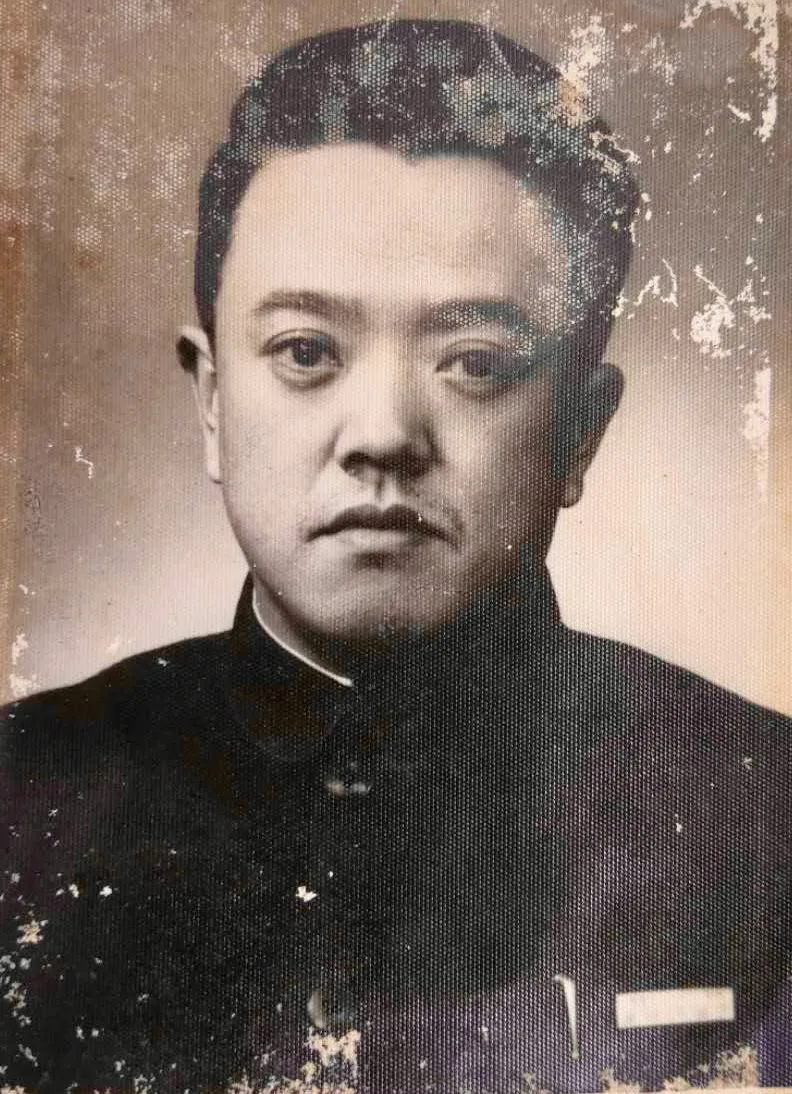
Li Zhongchu 李仲初
also known as Zhongchu Li
b. 1921-12-02, Qingdao, Shandong, China
d. 1982-11-01
📖 English version below — Jump to English ↓ · 本页中文在上,英文见下方。
李仲初(姓氏确定;名字汉字为“仲初”(“仲初”非“重初”或“忠初”,2026年由Lijie之母李恂确认))— 周丽婕的外祖父。属鸡,1921年12月2日生于青岛(由李恂于2026年确认)。他与未来的妻子尚耀真(同属鸡,1921年9月15日生)同年同地出生。两人成长于德占末期、日占、民国和新中国成立等历史巨变之间,共育三子女,包括周丽婕的母亲李恂(1956年生)。
1982年11月1日辞世,享年60岁— 距女儿李恂与周玲结婚(1982年9月18日)仅六周,距外孙女周丽婕出生尚有一年多。终未能见到外孙女。
另一张肖像
除页首这张肖像外,档案中另有一张李仲初的正装肖像 — 一位身着深色中山装的男士。此照片由其女李恂于2026年指认为李仲初本人。
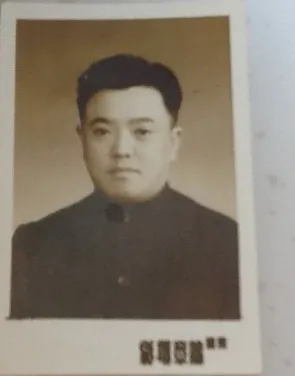
照片动画
回忆我的父亲 — 女儿手记(2026年7月)
2026年7月,女儿李恂(周丽婕之母)写下对父亲的回忆。因全文以追忆他为主,此处照录全篇(其本人页面亦载此文):
我的父亲是个性格耿直、很有才华的人,写得一手好字,聪明而有智慧。我记得小时候,不管谁家有事,都愿意来找他商量,他也总能帮别人找到解决的办法。母亲则热情好客,凡是来的客人,都以好菜好饭招待。所以家里总是亲戚朋友往来不断,我就是在这样温暖的环境中长大成人。
父亲从小教育我们:做人要正直,待人接物要有礼貌,要多学习——人只有具备一技之长,才能在这世上立足谋生。后来他生病了,偏瘫在身,却凭着坚强的毅力坚持康复锻炼。右手不能写字,他就用左手重新学写字;每天还跟着收音机学日语。这些事,都在我的记忆中留下了深刻的印象。
后来他再次病倒,这一次很严重(贲门癌——胃的贲门部,即胃的上端入口)。在父亲的影响下,我立志要好好学习,做一个像他那样有学识的人。只是我们这一代生不逢时,赶上文化大革命,始终没能上一所正规的四年制大学。后来,我一边工作一边完成了继续教育的学业。所以在我有了孩子以后,心里便默默立下心愿:一定要让孩子接受最好的教育,以弥补我当年的缺憾,也不辜负父辈的期望。如今,孩子能够用所学回馈社会,是我最大的欣慰——她以自己的学识,投身社会慈善事业。
— 2026年7月
注:除姓氏外,人名汉字均为推测,已由Lijie之母于2026年6月确认。
English
The portrait above — the studio photograph showing him in a dark high-collared Chinese-style jacket, looking directly at the camera with the serious composure of mid-century Chinese formal portraiture — is one of only two images of Zhongchu Li in this archive, and a principal way his face enters the visual record of the family. He died before Lijie was born, so no one in the next generation knew him in person. The print is aged, edges spotted with mottling typical of pre-1980 Chinese photographic paper. It is among the most precious single objects on the Zhou side.
A second portrait
A second formal studio portrait of Zhongchu Li — a man in a dark Zhongshan (Mao-style) jacket — was identified by his daughter Li Xun in 2026.
Lijie’s maternal grandfather was born in Qingdao on 2 December 1921 (confirmed by Li Xun, 2026). His future wife Yaozhen Shang (Lijie’s maternal grandmother) was born in the same city earlier that same year, on 15 September 1921 — both of them born in the Year of the Rooster. They grew up under what had been the city’s late-German and Japanese-occupation periods, came of age through the Republican and Civil War years, and lived their adult lives in the People’s Republic. They had three children, including Lijie’s mother (b. 1956).
He died 1 November 1982, age 60 — six weeks after his daughter’s marriage to Ling Zhou on 18 September 1982, and a little over a year before Lijie was born. He did not live to meet his granddaughter.
Remembering My Father — his daughter’s note (July 2026)
In July 2026, his daughter Li Xun — Lijie’s mother — wrote a remembrance of her father. Because the note is above all about him, it is reproduced here in full, in her own words (it also appears on her own page):
My father was a man of upright character and real talent. He had beautiful handwriting, and he was clever and wise. I remember that when I was young, no matter which family in our circle had a problem, they were all willing to come to him for advice, and he could always help them find a way through. My mother was warm and hospitable; whoever came was received with good food and a good table. So our home was always full of relatives and friends coming and going, and it was in this warm environment that I grew up.
From early on, Father taught us to conduct ourselves with integrity, to treat others with courtesy, to keep learning, and that only with a skill of one’s own can a person make a living in this world. Later he fell ill and was left with hemiplegia, but through sheer strength of will he worked at his rehabilitation. When his right hand could no longer write, he taught himself to write with his left, and every day he followed the radio to study Japanese. These things left a deep impression on me.
Later he fell ill again, and this time it was serious — a cancer of the stomach, at the cardia, the top entrance to the stomach. Under my father’s influence, I resolved to study hard and become a person of learning as he was. But our generation came of age at the wrong time: with the Cultural Revolution, I never had the chance at a proper four-year college education. In later years I completed my studies through continuing education while working. So after I had a child of my own, I quietly resolved to give my child the best education possible, to make up for what I had lacked and to fulfill the hopes of the generation before me. Today, that my child gives back to society is my greatest comfort — she devotes her learning to charity work for society.
— July 2026
At the Qingdao Zhanqiao (青岛栈桥) pier, c. 1960s — family group portrait
A second photograph of Lijie’s maternal grandfather is a a black-and-white frame taken at the famous Qingdao Zhanqiao (青岛栈桥) pier by the Tianzhen Photography (天真照相) studio — the studio’s name printed in red ink under the family group. Lijie’s maternal grandfather stands at right in a heavy fur-collared overcoat and a dark military-style cap; Lijie’s maternal grandmother stands beside him in a dark wool coat with prominent buttons; in front of them a small girl of about four in a buttoned-up wool coat and striped pants holds her father’s hand; on the left edge a boy of about seven stands separately in a dark Mao-collar suit; on the right edge a slightly older girl in a lighter coat stands at her grandfather’s hip.
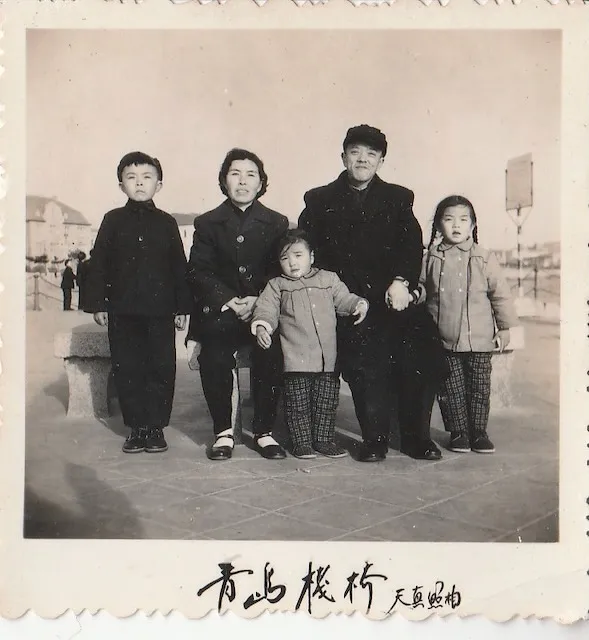
The dating reads as 1960s — the photo paper’s deckle-edge format and the heavy winter coats fit the 1960-1968 era of Qingdao family weekend studio portraits at the Zhanqiao pier. Lijie’s maternal grandfather would have been in his early-to-mid forties. The three children in the frame are his and his wife’s children: Lijie’s uncle Mengling Li on the left (identified by Chuck, 2026), his older sister at his grandfather’s hip on the right, and the youngest child between her parents in the middle — most plausibly Lijie’s mother (b. 1956), though the specific positioning of which younger girl is which is open for Lijie’s family to refine.
The Zhanqiao pier itself — an 1891 pier projecting into Qingdao Bay, the city’s most photographed waterfront landmark across the twentieth century — is the Qingdao equivalent of the Marietta riverfront in this archive’s geographic emotional logic: the place generations of the same family stood for portraits across the decades.
Structured record: FamilySearch — Zhongchu Li (GMG8-RDD).