Rielingshausen · Baden-Württemberg · Germany
Friedhof, Rielingshausen
The hillside cemetery and churchyard of Rielingshausen, with the family's hand-carved gravestones and the WWI/WWII memorial wall listing the village's war dead — including many Wildermuths across both wars.
Why this place matters
The cemetery is where the people who stayed are buried. The memorial wall, with its rows of Wildermuth surnames from 1914–18 and 1939–45, records the cost of the two world wars to the village's most populous family. Chuck's 2018 photograph of the memorial is the most legible record of those names this archive holds.
Then & now
Robert Earl photographed the hillside graves on the November 1992 trip; Chuck framed the same hillside in 2018.
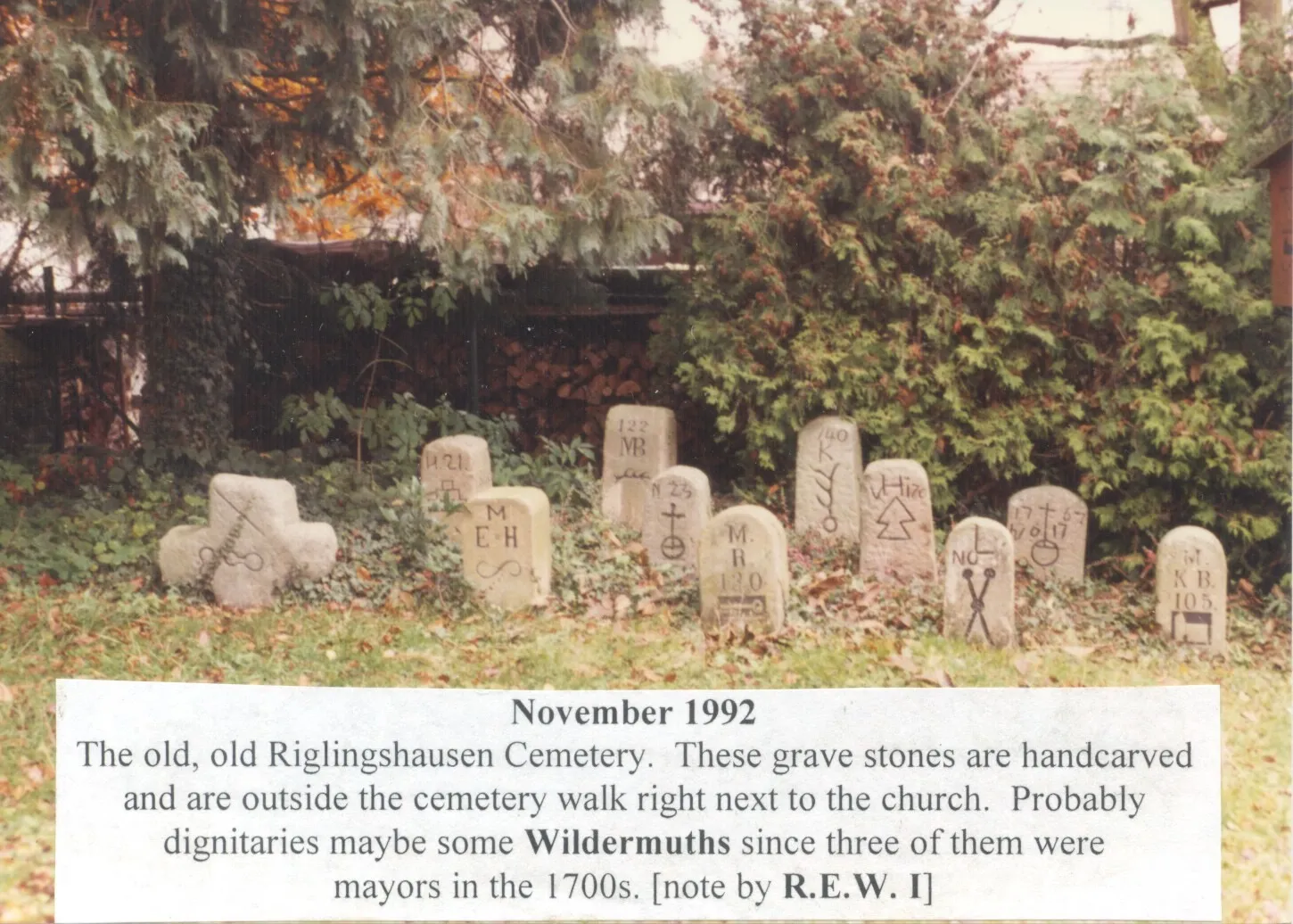
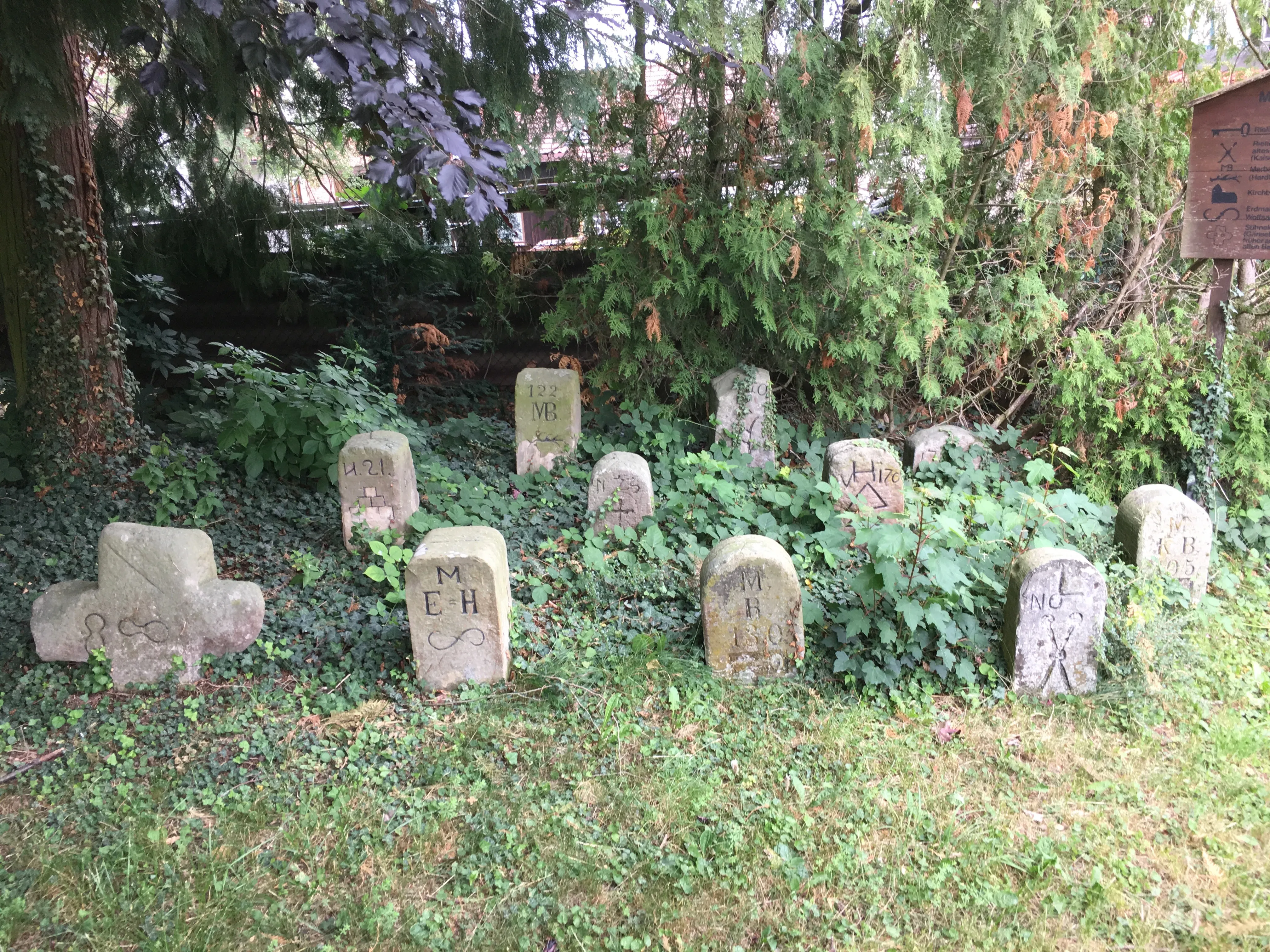
The cemetery hillside
Across generations
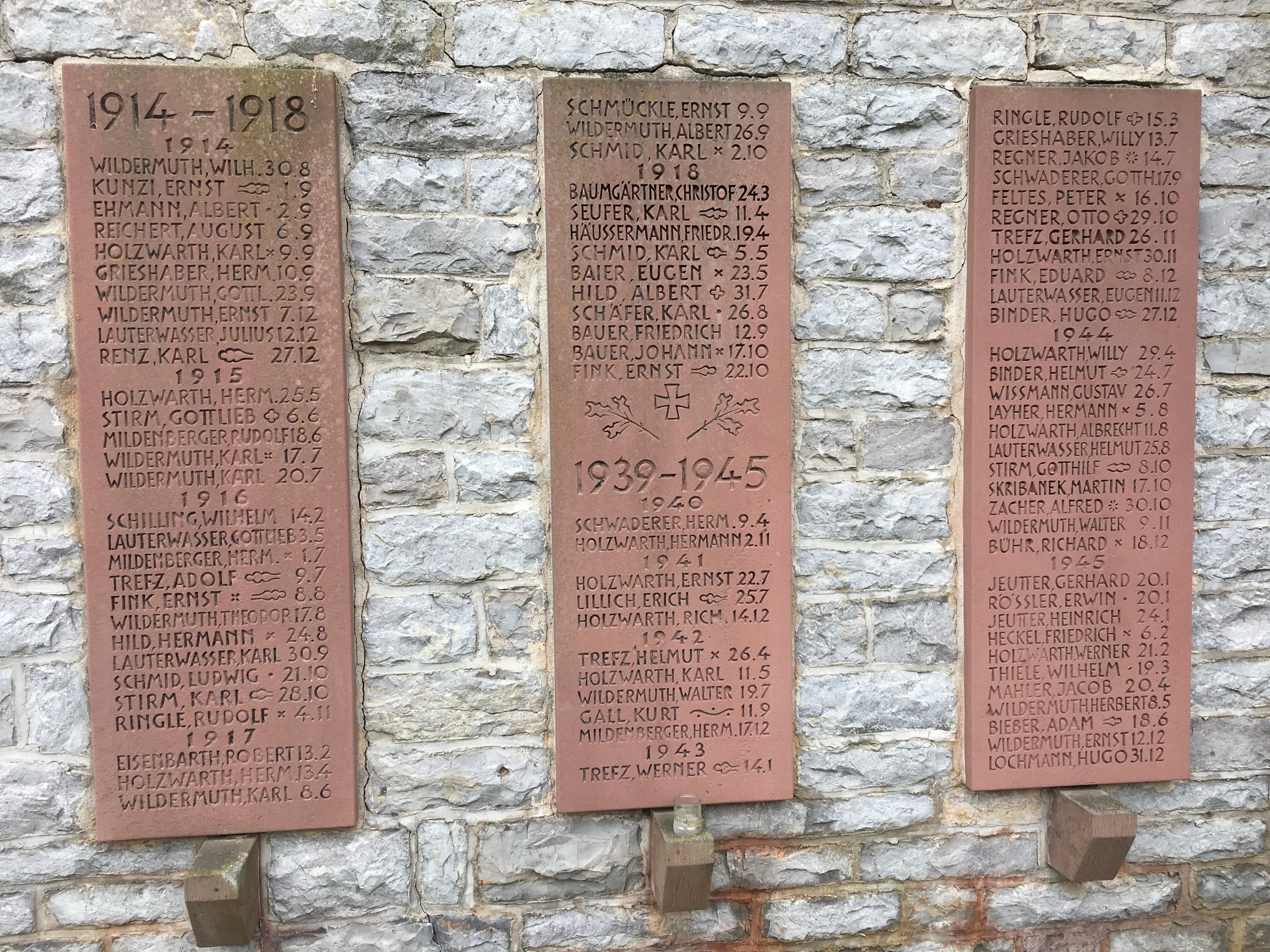
The Rielingshausen WWI/WWII memorial wall. Three tablets: the 1914–18 dead on left and right, the 1939–45 dead in the center. Wildermuth names appear repeatedly across all three — Wilh., Karl, Ernst, Hermann, Albert, Walter, Rudolf, and others. This is the document Robert Earl's 1989 manuscript referred to when it noted '23 Wildermuths' on the village memorial.
Alignment: No 1992 frame of the memorial wall exists in the family archive; Chuck's 2018 frame is the first.
A steep hillside cemetery behind the village church, where the Wildermuths who did not emigrate are buried. The graves are hand-carved, the older ones eroding past legibility.
Set into the churchyard wall is the village’s First and Second World War memorial — three brown stone tablets recording the village dead. Chuck’s 2018 frame brings the names into legibility: the 1914–1918 tablet lists, among others, Wildermuth Wilhelm (30.8), Wildermuth Karl (multiple, on multiple dates), Wildermuth Ernst (7.12), Wildermuth Hermann, Wildermuth Rudolf, Wildermuth Hugo — and the 1939–1945 tablet in the center adds Wildermuth Ernst, Wildermuth Albert (26.6), Wildermuth Walter (11.5), among others. Robert Earl’s count of “23 Wildermuths” on the memorial appears to be conservative.
This wall and the hillside graves above it are the village’s documentation of what staying cost. See the dedicated memorial artifact for the full roll of Wildermuth names across both wars.