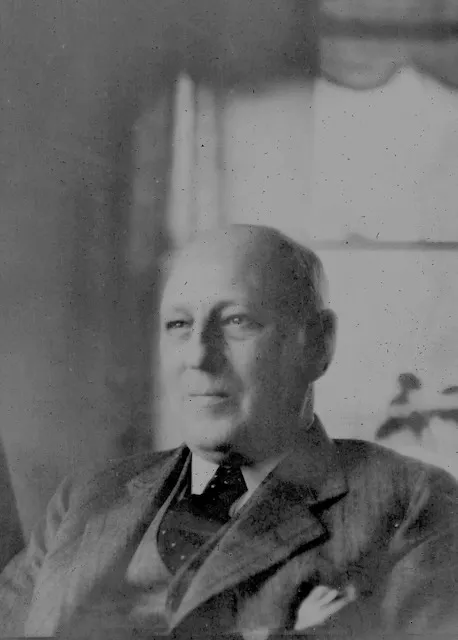
Dr. George Henry Eesley (of Toronto)
also known as George Henry Eesley, M.D. — the physician of Toronto. 'Dr. George' in William Eesley's c. 1916 obituary.
b. 1876-09-10, Ovid, Michigan
d. 1974, Toronto, Ontario, Canada (buried Toronto)
The Eesleys had been millers for at least six documented generations by the time George Henry was born — back through his father Albert Robert Sr, who built mills across Michigan and operated one in Toronto until his death, and back through John Eesley the Hanwell journeyman miller, and back further to Joseph Eesley in 18th-century Oxfordshire whose own father had worked at the trade. George was the one who broke the chain.
Born 10 September 1876 in Ovid, Michigan during the family’s Michigan years; he died in 1974 at age 97 or 98 — the longest-lived of the ten siblings by a wide margin. The MGM cameras had filmed Hiroshima three decades before he died; the Vietnam War had ended the year of his death. The medical profession he had entered in the 1890s had been transformed beyond recognition during his career.
He took up medicine, finishing his studies during the years the medical profession in Toronto was consolidating into its modern professional form. The Faculty of Medicine at the University of Toronto had been established in 1843; by the late 1880s and 1890s, when George would have trained, it was an institution producing physicians in significant numbers each year. The Toronto General Hospital had been founded in 1819 and was through this period expanding into the major teaching hospital it would become in the 20th century. To be a Toronto-trained physician in the 1890s was to be entering one of the city’s most respected professions, with a regulated college (the College of Physicians and Surgeons of Ontario, established 1869), a journal (the Canadian Medical Association Journal, founded 1911), and a recognised place in Toronto’s professional class.
The medicine George practiced would be unrecognisable to a 21st-century physician in many ways. Antibiotics did not exist — sulfa drugs would not appear until the 1930s, penicillin not in clinical use until WWII. Anesthesia was ether and chloroform. Diagnoses were made by history-taking, percussion, palpation, and the physician’s accumulated bedside experience; the X-ray, discovered in 1895, was just entering clinical use during his career; the electrocardiogram came around 1903. Infectious disease was the dominant killer: tuberculosis, typhoid, diphtheria, pneumonia, the seasonal cycles of childhood illness. House calls in horse-drawn carriages were normal for the first part of his practice; by the end he would have been making them by streetcar and then by automobile.
A general practitioner in turn-of-the-century Toronto served a defined neighborhood, kept his consultation hours in a front room of his own house, set bones and delivered babies and sat through pneumonia and gave the dying their final morphine. The hours were long. The pay was modest. The social standing was substantial.
The Toronto Eesley clan
His patients would have included his own family. The Toronto Eesleys by the turn of the 20th century were the geographic center of the entire family: George the physician, his three sisters in their married households (Anna Scoon, Jennie Baxter, the third whose given name is open but is documented as Mrs. George Sinclair), their parents Albert Robert Sr (1837–1902) and Jennie Goldie (1836–1911) in retirement. When his father died in 1902 and his mother in 1911, the deaths were likely attended by George himself — a son who was also a physician, sitting at the bedside through the closing illness.
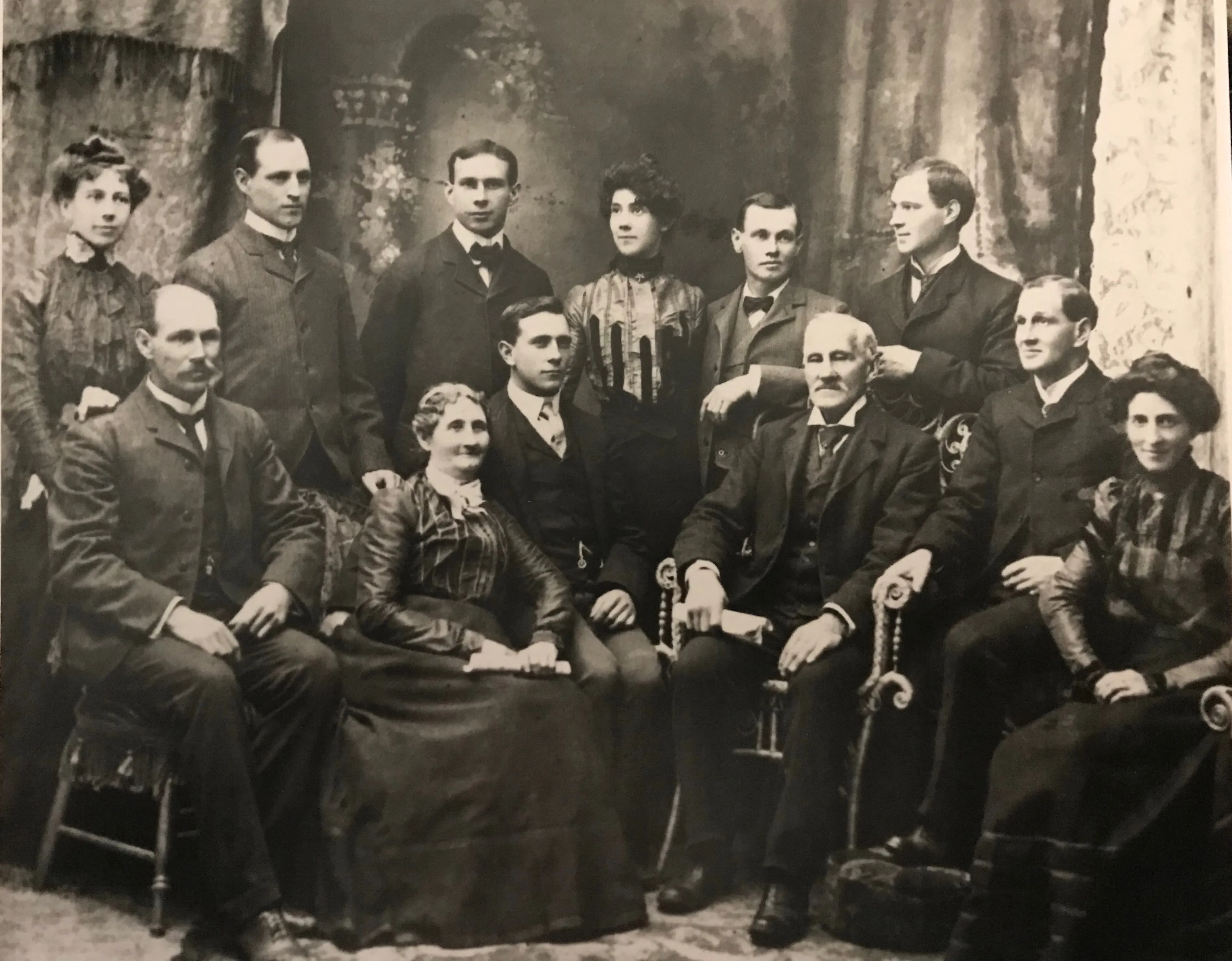
He appears in the 1899 Eesley family group portrait standing in the back row between his brother Charles (“Charlie”) and his sister Jennie — a man in his early thirties or so, in formal studio dress, almost certainly already a practicing physician by then.
Marriage (if any) and descendants are open in this archive — Toronto medical registries, the Canadian Medical Directory of the period, and the Ontario civil registrations of the 1890s and 1900s would settle them.
Sources: Dale Eesley / FamilySearch — George Henry Eesley (LB42-T16); William Eesley obituary, c. 1916; the “Eesleys circa 1900” PowerPoint deck, transmitted by Chuck Eesley 2026.