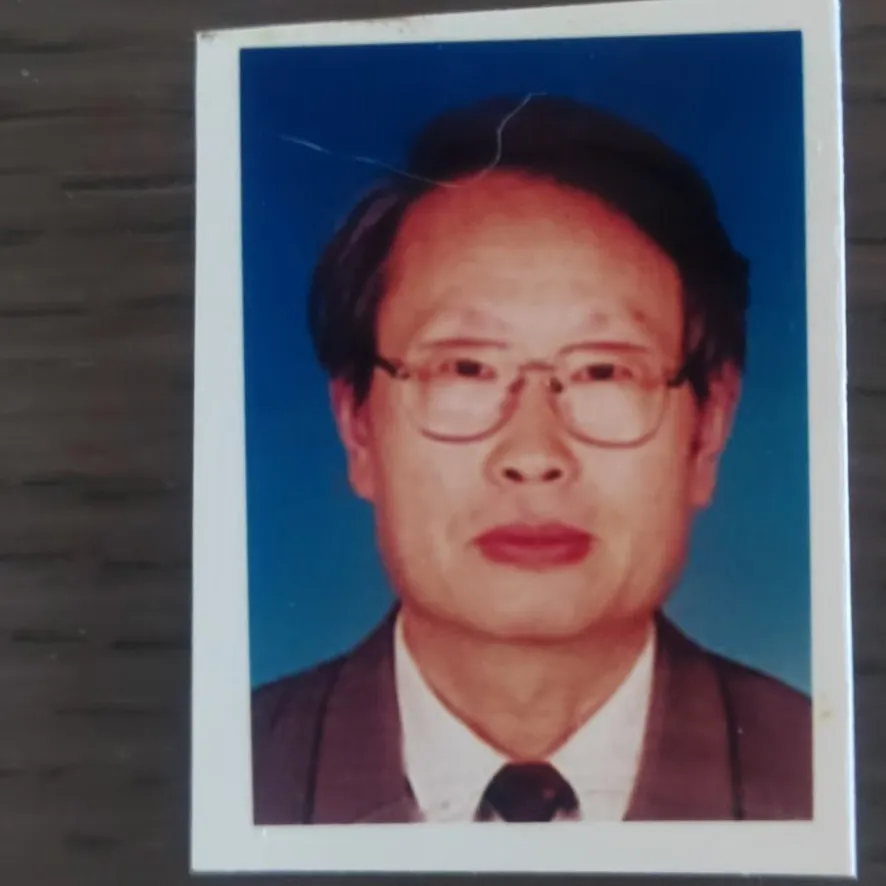
Zhou Zhaozheng 周兆帧
also known as Zhaozheng Zhou
b. 1938, Jiaozhou Shi, Qingdao Shi, Shandong, China
📖 English version below — Jump to English ↓ · 本页中文在上,英文见下方。
周兆帧(姓名汉字已由Lijie之母于2026年6月确认 — 与其兄周兆祥同辈,按“兆”字辈命名)— 周丽婕之叔祖父。1938年生于胶州市 — 比兄长晚八年,出生地相同。与轩苏英成婚。
一生梗概 — 据周玲手记
2026年8月,Lijie之父周玲手书两页回忆,本节即据此而来。
1966年毕业于青岛医学院本科 — 正值文化大革命开始之年。彼时大学毕业生稀少,须由国家按需分配。
家中三个孩子,唯他一人读到大学毕业。 父亲周茂礼早逝时他才一岁多,母亲庞焕彩独自抚养三子女而无工作,兄周兆祥与姐周秀珍只得去当学徒工挣钱养家。
他最终落在山东省最贫困的惠民地区、阳信县,由医师做到副主任医师。
“因为是在贫困落后的地区医院,付主任医师就算进升到顶了。如果是在青岛等大城市早就进升到主任医师了(名额的限制)。”
他自己办调动,终未办成。 母亲晚年整天叨念,思念幼子,常年流泪以致双目失明,说她惟一的心事就是想让他回青岛。他托了不少人办理调动,办了多年始终未成 — 侄儿周玲还曾陪他到经办人家中送礼。
本页按来源分条记述。若只想读故事本身,见《二十四年》。
本该留在青岛 — 据幼女周亮2026年9月微信
手记与录音都从“被分配到外地”讲起。其幼女周亮补出了前面的一节:
“我爸爸不是文革前毕业的,他是1966年毕业生,他学习成绩优秀本来已经确定了在青岛医学院留校工作,突然爆发文革,所有毕业分配暂停了,留校毕业名单也作废了。”
他原本已经留校。 成绩优异,名单已定,工作就在青岛。文革一起,全国毕业分配冻结,留校名单作废。他失去的不是一个机会,是一份已经到手的工作。
名单作废之后,那些位置给了谁,家中并不知道。周亮说:只知道原留校名单作废了,“具体换成谁了只有查阅青岛医学院档案才有答案”。本档案不作推测。
一年的延宕,与一次对换 — 1967年秋
“我爸爸是1967年秋天分配到阳信的,文革原因延迟分配一年,当时学校给补发了大概八个月的工资。”
“我爸爸原本分配到大西北宁夏的乡镇医院,他自己和同学换了,当时学校管理混乱,去艰苦的乡镇医院双方同学互相同意就可以。”
“他们这一届虽然延迟一年分配到边远地区的乡镇医院,但都属于国家干部编制的医生。”
四点:
- 分配延迟整整一年,1966年毕业,1967年秋才到阳信。学校事后补发约八个月工资 — 这一年的空悬,校方是认账的。
- 原分配地是宁夏的乡镇医院。 仍是医生,仍属国家干部编制 — 这一届人虽被发落到边远乡镇,身份未降。降的是距离:青岛到宁夏两千公里。
- 他是和同学对换才去的阳信。 那年学校管理混乱,去艰苦地区的乡镇医院,双方同学彼此同意即可 — 不必申请,不必批准。两个年轻人各自接过对方的去处。
- 阳信在山东最北、黄河以北。他先在翟王乡镇医院(乡镇一级,比县级更低),1974年才调入妻子所在的阳信县中医院。
终于回来 — 1991年
手记止于失败。2026年9月,周玲在青岛口述了结局:后来是侄子办成的。 周玲动用自己的关系,逐人去谈,最终把他、妻子Su Ying Xian与三个女儿一并迁回青岛。
1991年,全家自阳信迁回。1967年秋去时二十九岁,回来时五十三岁 — 在阳信二十四年。已成家,三个女儿 — 周燕与周伟(1970年生的双胞胎)、周亮(1976年生)。丽婕说,女儿们回青岛“很高兴 — 日子也好了,教育也好了”。
夫妇二人其后皆在青岛市南区浮山所医院工作。
母亲庞焕彩于1992年4月6日去世,在全家迁回约一年之后。
2001年退休。 自1967年秋到任,行医三十四年,其中二十四年在阳信。
注:除姓氏外人名汉字为推测,已由Lijie之母于2026年6月确认。
1967年秋至1991年,在阳信二十四年;自1966年毕业算起二十五年。录音中“将近四十年”“六十多岁”二语,系口述约略之辞,今据周亮所记年份更正。
日期存疑:档案记周茂礼卒于1935年,而本人生于1938年 — 父卒后三年不可能出生。详见手记页。
English
Zhaozheng was born in Jiaozhou Shi eight years after his elder brother Zhaoxiang, in the same region the Zhou family came from. Married Su Ying Xian. Living status not yet recorded.
The life, from his nephew’s account
In August 2026 Lijie’s father Zhou Ling wrote out two pages by hand about this uncle. Everything below comes from them.
The only one who got an education
His father Zhou Maoli died when Zhaozheng was just over a year old. His mother Pang Huancai raised three children alone with no work of her own; his elder brother Zhaoxiang and sister Xiuzhen went out as apprentice workers so the family could eat. Their mother gleaned discarded vegetable leaves at the market.
Of the three children, only Zhaozheng finished university.
1966
He graduated from Qingdao Medical College in 1966 — the year the Cultural Revolution began.
He had the job already
His youngest daughter Zhou Liang supplied, in September 2026, the piece of this that nobody had written down:
“My dad did not graduate before the Cultural Revolution. He was in the class of 1966. His grades were excellent and he had already been confirmed for a retained post at Qingdao Medical College, then the Cultural Revolution suddenly broke out, all graduate assignments were suspended, and the retained-post list was voided.”
A 留校 post — being kept on by your own institution — went to the top of a graduating class, and it would have kept him in Qingdao, in a teaching hospital, near his mother. The list existed and his name was on it. Then the Cultural Revolution broke out, graduate placement stopped nationwide, and the list was scrapped. He did not lose a chance. He lost a job he already had.
Who received those posts afterwards is not known to the family, and this archive does not guess. As his daughter puts it: she knows only that the original list was voided, and “who it was changed to would only be answered by consulting the Qingdao Medical College archives.”
A year in limbo, and a swap — autumn 1967
“My dad was assigned to Yangxin in the autumn of 1967. The assignment was delayed a year because of the Cultural Revolution, and the college back-paid him about eight months’ wages.”
“My dad was originally assigned to a township hospital in Ningxia, in the far northwest. He swapped with a classmate himself. Administration at the college was chaotic then — for going to a hard-posting rural township hospital, it was enough for the two classmates to agree with each other.”
“Although their cohort was delayed a year and assigned to township hospitals in remote areas, they were all doctors on the state cadre establishment.”
Four things here that the archive did not have:
- The delay was a full year. He graduated in 1966 and did not reach Yangxin until autumn 1967, and the college back-paid roughly eight months of wages for the interval. The institution acknowledged, in money, that it had left him in limbo.
- The first assignment was a township hospital in Ningxia. He would still have been practising medicine, still on the state cadre establishment (国家干部编制); the whole delayed cohort went to remote township hospitals without losing that standing. What the posting cost him was distance: two thousand kilometres from his mother.
- He got out of it by swapping with a classmate, himself. Not by appeal and not by anyone’s mercy. With the college’s administration in disarray, a trade of hardship postings between two students needed nothing but their mutual agreement — no application, no approval.
- Yangxin was two postings, not one. He began at the Zhaiwang Township Hospital (翟王乡镇医院) — township level, a rung below county — in the far north of Shandong beyond the Yellow River, and only in 1974 moved to the Yangxin County Traditional Chinese Medicine Hospital, where his wife Su Ying Xian already worked.
The ceiling
He spent the rest of his working life at the county hospital and rose from physician to deputy chief physician (副主任医师). His nephew is precise about what that meant:
“Because it was a hospital in a poor, backward district, deputy chief physician counted as reaching the top. If it had been in a big city like Qingdao he would long since have been promoted to chief physician — it was a matter of quota limits.”
A career capped by where the state had put him, not by anything he did.
The transfer that never came
His mother grew old in Qingdao with all her family around her except him.
“Missing her youngest son, she cried often, and her eyes failed until she could no longer see. She said the one thing still on her mind was to have my uncle come back to Qingdao.”
He asked many people to arrange a transfer and worked at it for years without success. His nephew Zhou Ling went with him to the homes of the officials handling it, carrying gifts.
The transfer that did come — 1991
The handwritten pages stop there. In September 2026, over dinner in Qingdao, Zhou Ling told the ending: the nephew got it through. He worked his own connections, person by person, until the transfer was approved, and Zhaozheng moved back to Qingdao with his wife Su Ying Xian and their three daughters.
The year is 1991, confirmed by his youngest daughter. He had gone out to Yangxin at twenty-nine in the autumn of 1967 and came home at fifty-three — twenty-four years in Yangxin, twenty-five from his graduation — married, with three grown or nearly grown children: Zhou Yan and Zhou Wei, twins born in 1970, and Zhou Liang, born in 1976. Lijie, translating her father, said the daughters were “very happy to get back, and get better — both life quality and better education.”
He and his wife both took posts at the Fushansuo Hospital in Shinan District (青岛市南区浮山所医院) — so the transfer carried two medical careers home, not one.
His mother Pang Huancai died on 6 April 1992, about a year after they came back. She got the year.
Retirement
He retired in 2001, thirty-four years after taking up the posting in the autumn of 1967 — twenty-four of them in Yangxin, ten back in his own city.
The portrait
The photograph at the head of this page is the first image of him the archive holds. It is a formal portrait against the blue studio ground used for Chinese identity and work photographs — dark jacket, white shirt and tie, wire-rimmed glasses — and what reached the archive is a phone photograph of the original print, creased across one corner and sitting on a wooden table. His daughter Zhou Liang sent it in September 2026.
The spoken account said “almost forty years” and “already in his sixties, maybe,” and put his mother’s death thirty days after the return. All three were approximations, corrected here against the dates his daughter supplied and Lijie’s own follow-up. See the recording page.
A date problem, not yet resolved: this archive records his father as dying in 1935 and Zhaozheng as born in 1938 — impossible together. See the recollection page for the three readings and why Maoli’s 1935 death year is the likeliest error.
Structured record: FamilySearch — Zhaozheng Zhou (GM1Y-9DX). Chinese characters for given names confirmed by Lijie’s mother, June 2026.
Appears in
- 二十四年 — Twenty-four years: the list, the swap, and the transfer that finally came — essay
- The Qingdao Families — Zhou, Li, and Shang — essay
- 周玲手记:叔叔周兆帧与奶奶庞焕彩 — Zhou Ling's handwritten recollection of his uncle and grandmother — ancestor-sketch
- 延安三路109号:周玲讲述接叔叔回青岛 — "He finds someone to get this person back": Zhou Ling tells how he brought his uncle home — ancestor-sketch